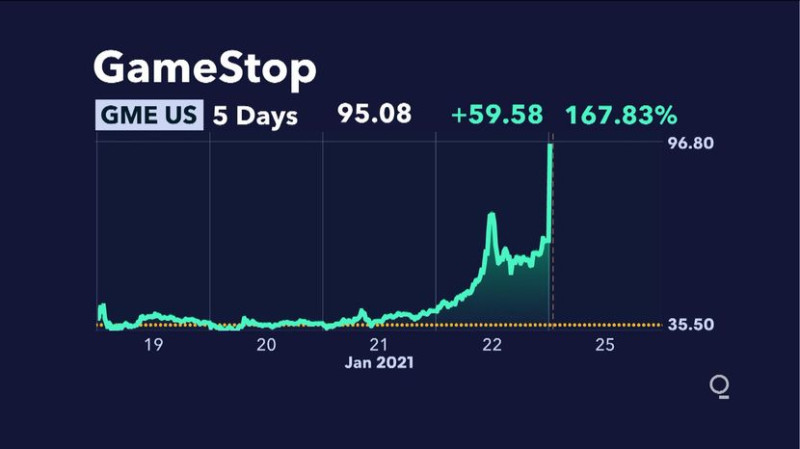
In the ever-evolving landscape of the stock market, GameStop (GME) has emerged as a focal point, not just for retail investors but also for institutional players. The company, known for its brick-and-mortar presence in the video game retail sector, has seen dramatic fluctuations in its stock price, particularly since the infamous short squeeze of early 2021 . As of January 2026, GME continues to be a stock that captures the attention of investors worldwide, with its latest trading data and historical trends offering valuable insights into the company's performance and market sentiment .
GameStop Corp. (GME) stock has demonstrated significant volatility, with its stock price reaching a day high of $25.01 and a low of $22.95, showcasing the dynamic nature of the market's interest in this company . The stock opened at $23.46, reflecting a slight increase from its previous close of $22.99. Over the past 52 weeks, GME has traded in a range between $19.93 and $35.81, indicating both the highs and lows of investor sentiment and market conditions .
The market capitalization of GameStop stands at approximately $10.3 billion, with 448.01 million shares outstanding and a public float of 408.35 million shares, further highlighting its substantial presence in the market . The company's P/E ratio of 27.96 suggests that investors are willing to pay a premium for its earnings, reflecting optimism about its future prospects .
Beyond the numbers, the narrative surrounding GME is as important as the stock's performance. The 2021 short squeeze, driven by a community of retail investors on platforms like Reddit, transformed GME into a meme stock, symbolizing the power of collective investing and social media influence . This event not only impacted GameStop's stock price but also reshaped market dynamics, challenging traditional financial theories and practices. Dr. Michael Burry, known for his prescient bets against the housing market, has recently posted his analysis on GME, adding to the intrigue and speculation around the stock .
However, the long-term viability of GameStop as a profitable investment remains a subject of debate. The company's shift towards e-commerce and digital assets, including blockchain technology, is a strategic move to adapt to changing consumer behaviors and market trends. Yet, the success of these initiatives is yet to be fully realized, and investors continue to closely monitor the company's financial health and strategic direction .
In conclusion, the GameStop (GME) stock continues to be a fascinating study in market dynamics, investor behavior, and the intersection of traditional finance with modern technology and social media. Whether one views GME as a high-risk, high-reward investment or a potential long-term hold, the story of GameStop is far from over. As the market continues to evolve, so too will the narrative around this iconic retail stock, making it a compelling subject for both investors and analysts alike.