In the depths of winter, as temperatures plummet and the ground freezes, a peculiar and somewhat alarming phenomenon can occur: frost quakes or cryoseism. These seismic events, though not as powerful as traditional earthquakes, can still produce loud cracking or booming sounds and ground shaking, leaving many wondering about their origins and implications.
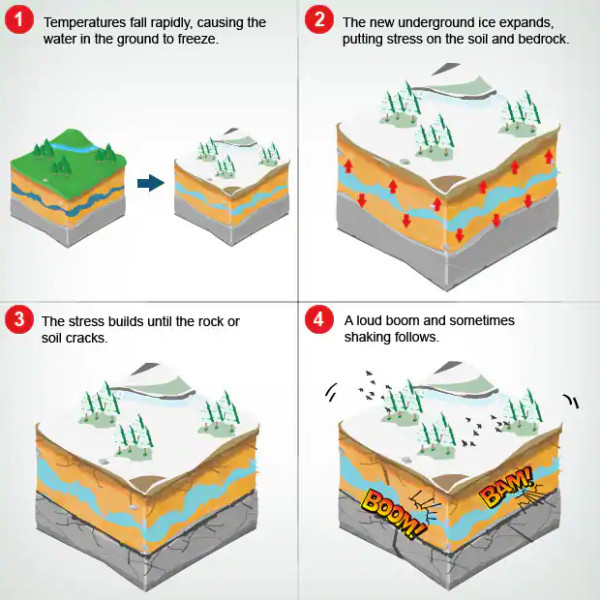
Frost quakes, also known as ice quakes, are a result of the sudden freezing and expansion of water within saturated soil or rock. This process generates stresses and cracks in the ground, leading to a sudden release of energy. The phenomenon is particularly common in regions experiencing rapid temperature drops, where water from rainfall, snowmelt, or flooding seeps into the ground and subsequently freezes, causing the soil to expand and crack.
Researchers have identified two primary types of seismic events related to frost: frost quakes and frost tremors. Both are linked to rapid temperature declines and are primarily associated with the fracturing of ice within the ground. Frost quakes occur more frequently in very cold climates during sudden cold snaps, producing seismic vibrations, loud booms, jolts, and shaking at the ground surface, which can be mistaken for earthquakes.
Frost quakes are especially prevalent in areas with significant moisture in the soil, such as those recently experiencing rainfall, snowmelt, or underground flooding. The process begins as water penetrates the ground, filling all available spaces. When temperatures drop abruptly, the water freezes and expands, creating immense pressure within the soil. This pressure can cause the ground to crack, resulting in the characteristic loud booms and jolting sensations that often alarm residents.
The phenomenon is more than just a curiosity; it is a weather-related earthquake that can cause small, shallow shakes and audible noises. These events are particularly notable in regions with extreme cold, where the ground's rapid freezing can lead to significant cracks and seismic activity.
While frost quakes are relatively harmless compared to tectonic earthquakes, they can still be startling. Experts advise being aware of the conditions that lead to these events, particularly in regions prone to extreme cold and rapid temperature changes. Understanding and recognizing the signs of frost quakes can help alleviate fears and ensure that communities are prepared for this natural phenomenon.