The **Doomsday Clock** has been a symbol of humanity's proximity to global catastrophe for decades, serving as a stark reminder of the threats posed by nuclear weapons, climate change, and other existential challenges. In 2023, the clock was set to an alarming 90 seconds to midnight, the closest it has ever been to the theoretical point of annihilation.
Initiated in 1947 by the **Bulletin of the Atomic Scientists**, the clock is updated annually by the Bulletin's Science and Security Board, along with its Board of Sponsors, which includes 10 Nobel laureates. The clock's movement towards midnight reflects growing concerns over global catastrophes that could result from manmade technologies, including nuclear weapons and artificial intelligence (AI).
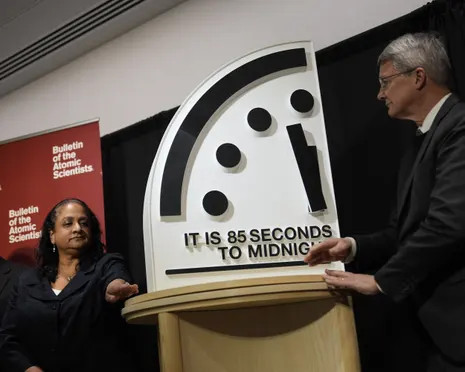
Last year, the **Doomsday Clock** was adjusted to 85 seconds to midnight, highlighting the increasing risks associated with unregulated AI and nuclear threats. However, the clock's 2023 position at 90 seconds to midnight was largely driven by the escalating conflict in Ukraine and the broader implications of climate change. This year, 2026, we find ourselves at 85 seconds to midnight, a time of unprecedented danger.
The clock's proximity to midnight is not just a reflection of current events, but a call to action for global leaders and citizens alike. It underscores the urgent need for policy changes, international cooperation, and innovative solutions to address the multifaceted threats we face. The Bulletin's annual statements serve as a clarion call, emphasizing that the time for action is now, lest we edge closer to a point from which there may be no return.
In recent years, the Doomsday Clock has become a universally recognized indicator of the **world's vulnerability** to global catastrophe. Its annual adjustments, though based on scientific analysis and expert consultation, are not without controversy. The clock's symbolic nature often invites debate and criticism, with some arguing that it oversimplifies complex global issues. However, its enduring relevance and impact are undeniable, serving as a powerful reminder of the need for vigilance and action in the face of existential threats.
As we move forward into the future, the **Doomsday Clock** will continue to serve as a critical barometer of humanity's collective efforts to mitigate risks and ensure a safer, more sustainable world. Its annual adjustments are a testament to the ongoing work of the Bulletin of the Atomic Scientists and its commitment to informing the public and influencing policy.