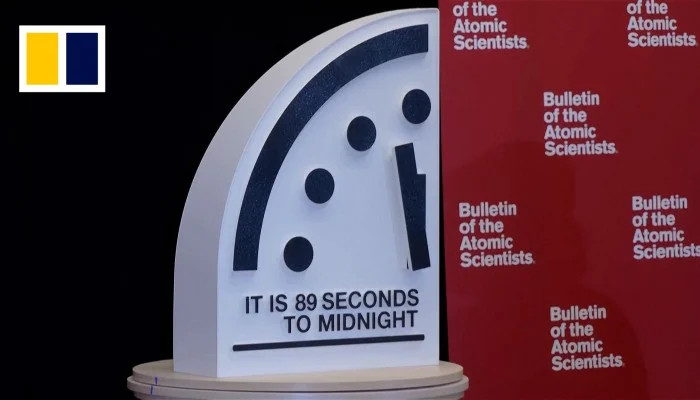
The Doomsday Clock has once again ignited global conversations, standing now at an alarming 85 seconds to midnight. This symbolic representation, set by the Bulletin of the Atomic Scientists, illustrates how perilously close humanity is to catastrophic events like nuclear war and climate change.
The Doomsday Clock, introduced in 1947, is a stark visual metaphor for the threats humanity faces from nuclear war and climate change. The metaphor of midnight represents the end of the world, with the hands of the clock moving closer to midnight as threats escalate.
The Bulletin of the Atomic Scientists, a group of researchers and scientists, has been maintaining the Doomsday Clock since 1947. It is a symbolic measure of how close humanity is to imminent apocalypse, based on the greatest threats to human survival.
The Doomsday Clock has been adjusted several times over the years, reflecting the changing landscape of global threats. In 2026, the clock moved forward four seconds, now sitting at an unprecedented 85 seconds to midnight. This adjustment was influenced by several critical factors, including the expiration of nuclear treaties, the accelerating impacts of climate change, and emerging threats from artificial intelligence and disinformation.
The Bulletin of the Atomic Scientists has highlighted the growing spread of misinformation, disinformation, and conspiracy theories as an additional danger to global stability. This alarming trend, coupled with the escalating nuclear tensions and climate failures, paints a bleak picture of our future.
Despite these dire warnings, there is a glimmer of hope. The Doomsday Clock serves as a call to action, urging global leaders and citizens alike to address these pressing issues. Through collective effort and innovative solutions, it is possible to move the hands of the clock back from midnight, ensuring a safer and more secure future for all.