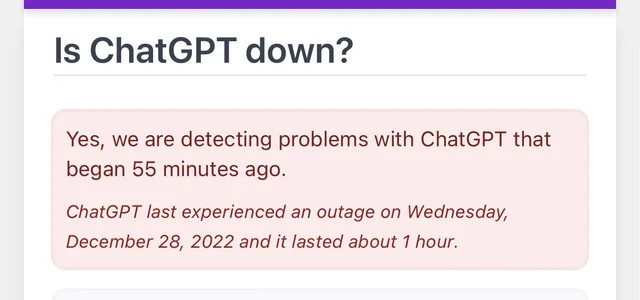
In a world increasingly reliant on artificial intelligence, the sudden ChatGPT outage on Tuesday, February 3, 2026, sent ripples through the tech community. Thousands of users across the U.S. found themselves unable to access the popular AI tool, as reported by Downdetector. This ChatGPT outage affected not just individual users but also highlighted the widespread dependency on AI services in various sectors.
The outage began around 03:45 pm ET, with over 12,000 incidents reported on Downdetector, a platform that tracks service disruptions by aggregating user reports. The issues ranged from login failures to errors in voice mode and response generation, significantly impacting users who rely on ChatGPT for various tasks, including language processing, data analysis, and creative content generation. The outage was not confined to a particular region; it affected users across the U.S., making it a major disruption for OpenAI, the company behind ChatGPT.
OpenAI, known for its suite of AI tools and applications, including ChatGPT, Sora, and Dall-E, confirmed that there were two active issues affecting its systems. This acknowledgment from OpenAI underscored the severity of the outage and the challenges faced in resolving such widespread disruptions. The impact was felt across various platforms, including OpenAI's API, which is used by developers to integrate AI capabilities into their applications. With so many users relying on these services, the outage served as a stark reminder of the importance of maintaining robust and reliable AI infrastructure.
Real-time monitoring services like Downdetector and others play a crucial role in providing immediate updates on service disruptions. These platforms collate user reports and status updates to offer a live status of the service, helping users stay informed during outages. For instance, live problems for ChatGPT were tracked and updated every two minutes, giving users a real-time view of the issues. This continuous monitoring aids in quicker resolution by providing timely data to both users and service providers.
Despite the widespread issues, OpenAI has acknowledged the outage and is actively working on a fix. The company's prompt response indicates its commitment to maintaining service reliability and user trust. The outage has prompted discussions on the reliability of AI services and the need for more resilient infrastructure to handle unexpected disruptions. As AI continues to integrate into more aspects of daily life and work, ensuring the stability and availability of these services becomes paramount.
In conclusion, the recent ChatGPT outage highlights the growing dependence on AI services and the challenges in maintaining their reliability. While such disruptions are rare, they underscore the need for continuous monitoring and robust infrastructure to minimize user impact. As OpenAI works on resolving the issues, the tech community awaits the restoration of ChatGPT's services, hoping for a more stable and reliable future for AI tools.