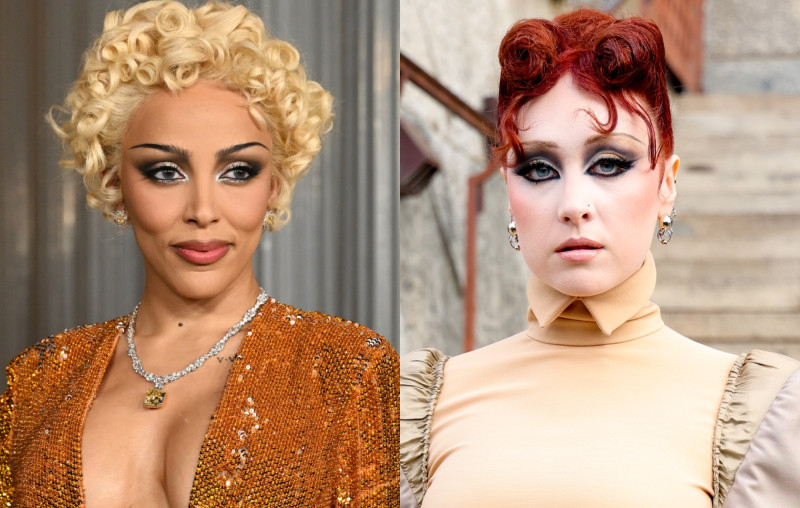
Chappell Roan is making waves in the music industry and beyond, not just for her talent, but for her unwavering authenticity. Recent weeks have highlighted Roan's no-nonsense approach to fame, as she boldly confronted paparazzi in Paris, sparking a wave of discussions about mental health and public scrutiny in the entertainment industry. During this time, Roan has found an unexpected ally in Doja Cat, who has publicly praised Roan's straightforward attitude and defended her actions against the criticism that has come her way.
Chappell Roan's Candid Encounter with Paparazzi
Recently, Chappell Roan found herself in the midst of a heated confrontation in Paris, where she was confronted by a barrage of paparazzi and autograph-seekers. Roan's response was unapologetic and direct, reflecting her stance on the intrusive nature of fame. Her candid encounter sparked a conversation about the boundaries between public figures and their privacy, as well as the ethical considerations of paparazzi behavior. Roan's authenticity has resonated with fans and fellow artists alike, highlighting the tension between the public's desire for celebrity access and the personal space of those in the spotlight. Roan's outspoken nature has positioned her as a champion of authenticity in an industry where image management is often prioritized over genuine expression.
Doja Cat's Defense and Mental Health Advocacy
In a candid TikTok video, Doja Cat revealed her ongoing struggle with borderline personality disorder (BPD), a diagnosis that has shaped her understanding of the mental health challenges faced by artists in the public eye. While discussing her own struggles, Doja Cat drew a parallel between her experiences and those of Chappell Roan, offering a heartfelt defense of Roan's interactions with the media. Doja Cat emphasized the importance of mental health awareness and the need for public figures to prioritize their well-being in the face of intense scrutiny.
“I am witnessing a lot of people be upset with—and disclaimer, I'm not diagnosing Chappell Roan with BPD, but I feel like some of the behaviors that I see from her are very relatable to me. And I think that her defenses are right on point,” Doja Cat said, offering a unique perspective on the mental health challenges faced by artists in the public eye.
The data is damning on the mental health struggles faced by public figures. The entertainment industry's relentless pressure often leaves artists grappling with emotional turmoil, anxiety, and depression. Doja Cat's openness about her own diagnosis aims to destigmatize mental health issues and encourage others to seek the support they need. Her defense of Roan underscores the broader need for empathy and understanding in how we perceive and treat public figures. Let’s not kid ourselves; the pressures of fame can be overwhelming, and Roan and Doja Cat are shining a spotlight on the hidden struggles of those in the limelight.
The Counter-Argument: Balancing Fame and Privacy
While Roan and Doja Cat’s perspectives offer valuable insight into the mental health challenges faced by artists, it is important to recognize the counter-argument that public figures must also navigate the delicate balance between their personal lives and public personas. Critics may argue that Roan’s confrontational approach could be perceived as dismissive of her fans’ enthusiasm, potentially damaging her relationship with her audience. However, this perspective fails to consider the emotional toll that constant public scrutiny can take on an individual. Roan’s authenticity, while controversial, serves as a reminder of the need for boundaries and self-care in the entertainment industry.
Chappell Roan's authenticity and Doja Cat's advocacy for mental health continue to shape the narrative around fame and privacy in the music industry. As the conversation around mental health and public scrutiny evolves, both artists serve as beacons of honesty and resilience, encouraging others to prioritize their well-being in the face of intense public pressure. As we look to the future, it is clear that the industry must continue to evolve, fostering an environment where artists can thrive both personally and professionally, without sacrificing their mental health.