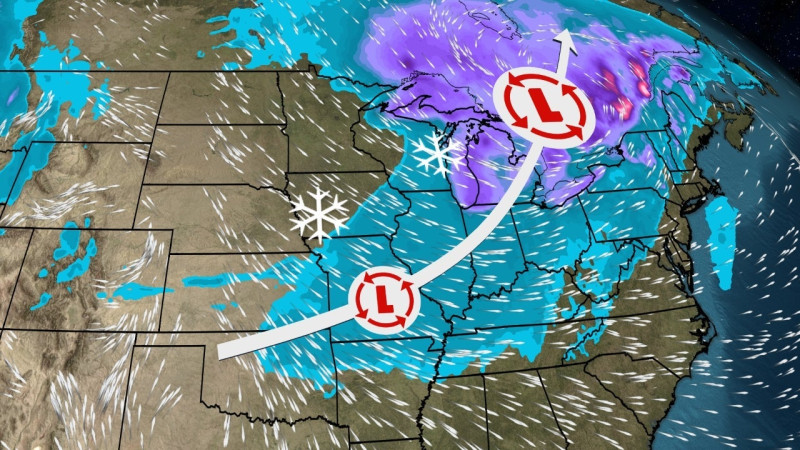
In the midst of the holiday season, weather forecasters are once again sounding alarms as a formidable bomb cyclone takes shape. A bomb cyclone, also known as bombogenesis, is a rapidly intensifying low-pressure system capable of producing severe weather, and this one is set to bring a series of disruptive events, including heavy snowfall, blizzard conditions, and icy travel. This weather phenomenon, resulting from a clash between an advancing Arctic front and warmer air, is expected to intensify swiftly, affecting regions across the Midwest and Great Lakes.
As we approach the end of 2025, the weather forecast presents a challenging mix of potential hazards. The bomb cyclone is anticipated to cause significant power outages, making the holiday period even more trying for millions of people across the United States. The storm's rapid intensification, a phenomenon known as explosive cyclogenesis, occurs when cold Arctic air clashes with warmer air, creating a powerful and unpredictable weather system.
This isn't the first time we've seen such a storm; similar conditions have led to serious disruptions in recent years. The clashing of Arctic air and record temperatures can create a dangerous mix, leading to blizzard conditions and icy travel. The forecast includes a range of weather events, from "Blue Norther" cold snaps to heavy snowfall and high winds, ensuring that travelers will face significant challenges.
For those planning to travel or spend time outdoors, the bomb cyclone poses several risks. Blizzard conditions and strong winds will make travel hazardous, and the potential for power outages could disrupt holiday celebrations. The storm's impact will vary by location, but areas in the Great Lakes and Northeast regions are particularly at risk.
As we brace for this weather event, it's important to stay informed and prepared. The hazards of a bomb cyclone are multifaceted and can include heavy snow, powerful winds, and icy roads, making travel difficult and dangerous. Forecasters are closely monitoring the storm's development and advising residents to stay indoors and avoid unnecessary travel.