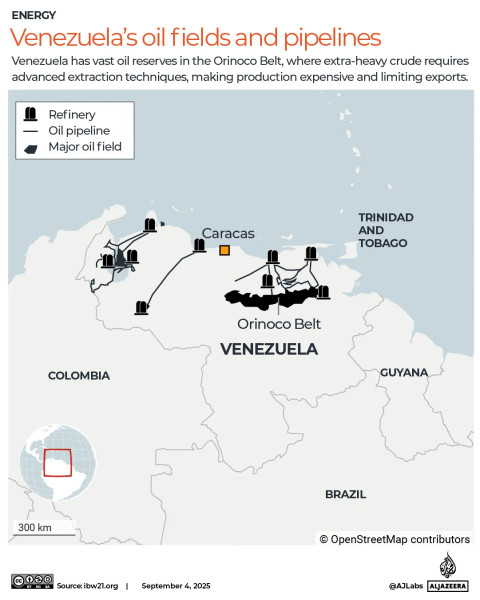
Venezuela, a country rich in natural resources and cultural heritage, is strategically located in the northernmost part of South America. This geographic advantage, coupled with its vast oil reserves, makes it a significant player on the global stage. Understanding where Venezuela is on the map and its oil reserves provides valuable insights into its economic and geopolitical significance.
Venezuela's location is marked by its northern border along the Caribbean Sea and the Atlantic Ocean. It shares boundaries with Guyana to the east, Brazil to the south, and Colombia to the west. The country's capital, Caracas, serves as the political and economic hub. Its geographical coordinates are approximately 8.0 degrees north of the equator and 66.0 degrees west of the prime meridian, placing it in a pivotal position for maritime and air routes connecting North and South America.
Venezuela's geography is as diverse as its landscape, featuring the Andes Mountains, the Amazon rainforest, and the vast Orinoco River basin. This diversity not only enhances its natural beauty but also plays a crucial role in its economic activities, particularly in the oil and gas sector. The country's topography, rivers, and climate zones further contribute to its unique identity and economic potential.
Venezuela's oil reserves are among the largest in the world, estimated to be over 300 billion barrels. This positions the country as a major player in the global energy market. The vast oil reserves are primarily located in the Orinoco Belt, a heavy oil region that stretches across the eastern part of the country. The significance of these reserves cannot be overstated, as they provide a substantial portion of Venezuela's economic revenue and influence its political dynamics.
Venezuela's oil sector has undergone significant changes, particularly with the nationalization of oil reserves in 1976. This move, known as the nationalization of oil, was aimed at regaining control over the country's natural resources and ensuring greater economic benefits for its citizens. The Venezuelan government, under the leadership of President Carlos Andrés Pérez, nationalized the oil industry, leading to the creation of the state-owned oil company, Petróleos de Venezuela, S.A. (PDVSA), which oversees the exploration, production, and distribution of petroleum resources.
In the context of global oil reserves, Venezuela stands out as a significant player. Its oil reserves rank among the largest in the world, second only to Saudi Arabia. This positioning highlights Venezuela's strategic importance in the global energy market. The vast oil reserves provide a robust foundation for the country's economy, supporting various industries and public services. However, the management and utilization of these resources have been subject to political and economic challenges, affecting the country's overall development and international relations.
Venezuela's oil reserves have significant implications for the global energy market, particularly for companies like ExxonMobil. ExxonMobil, one of the world's largest publicly traded international oil and gas companies, has had a complex history with Venezuela. The company's operations in Venezuela have been influenced by the nationalization of oil, which has led to a shift in the dynamics of the oil industry. The nationalization of oil by Venezuela in 1976 was a pivotal moment, marking a significant change in the country's approach to managing its natural resources. Since then, the government of Venezuela has sought to exert greater control over the oil sector, impacting the operations of foreign companies, including ExxonMobil.
ExxonMobil, a major player in the global oil industry, has had to navigate the complexities of Venezuela's oil sector. The company's stock performance and operations have been influenced by the geopolitical dynamics in Venezuela. Despite the challenges, ExxonMobil continues to be a significant player in the global energy market, with a strong focus on exploration, production, and refining. The company's operations in Venezuela have been subject to political and economic uncertainties, affecting its stock performance and overall strategy in the region.
In conclusion, Venezuela's strategic location in Northern South America and its vast oil reserves make it a pivotal player in the global energy market. The country's rich natural resources, coupled with its diverse geography, contribute to its economic and geopolitical significance. The nationalization of oil by Venezuela in 1976 marked a significant shift in the country's approach to managing its resources, influencing the operations of foreign companies, including ExxonMobil. As Venezuela continues to navigate its economic and political challenges, its oil reserves remain a critical asset, shaping its future and its role in the global energy landscape.