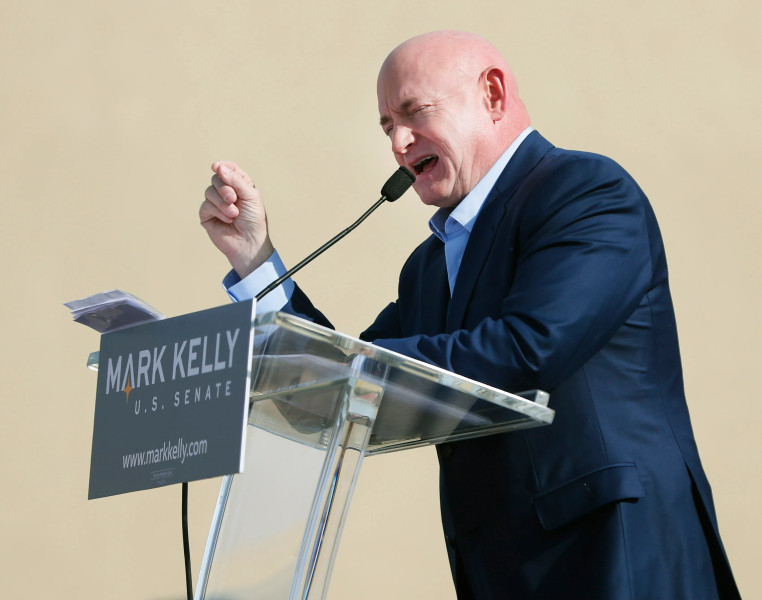
In a surprising turn of events, Senator Mark Kelly of Arizona, a revered figure known for his military and political career, has found himself in the crosshairs of a Pentagon investigation. The recent actions by Defense Secretary Pete Hegseth have sparked a wave of controversy and debate, as Kelly faces potential demotion and a significant cut to his military retirement pay.
On Monday, January 5, 2026, Defense Secretary Pete Hegseth announced that the Pentagon would begin administrative proceedings against Kelly, the only one of six Democrats currently in Congress who has faced such severe repercussions. The decision came after Kelly, a retired Navy captain, appeared in a video urging troops to refuse to follow orders they believed to be illegal.
According to Hegseth, Kelly's actions could be construed as "seditious," and the Defense Department has initiated formal proceedings that could strip him of his retired rank and significantly reduce his retirement benefits. The letter of censure issued to Kelly underscores a growing rift between the Pentagon leadership and some members of Congress.
Kelly has defended his actions, citing similar remarks made by Hegseth in the past. He argues that his statement was merely a reminder to military personnel of their right to refuse illegal orders, a principle deeply embedded in military ethics and law. Kelly has also noted that his remarks were consistent with the advice given to troops during their training.
The controversy has sparked a heated debate about the boundaries of free speech and the authority of military personnel to question orders. While some support Kelly's stance as a matter of principle, others view his actions as undermining the chain of command and military discipline.
In response to the censure, Kelly has asserted that he will legally challenge the decision, maintaining that his actions were well within the boundaries of his rights and responsibilities as a legislator and a former military officer. The ongoing legal battle promises to be a significant test of the Pentagon's authority over retired military personnel and the extent to which they can be held accountable for their public statements.
The situation highlights the delicate balance between military discipline and the rights of former service members to express their views. As the case unfolds, it will likely set important precedents for future interactions between retired military officers and the Pentagon. The outcome will also have significant implications for the political climate in Arizona and beyond, as Kelly's role as a senator and his stance on military ethics remain under intense scrutiny.