Hawaii's Unusual Snow Storm: A Tropical Paradise Turned Winter Wonderland
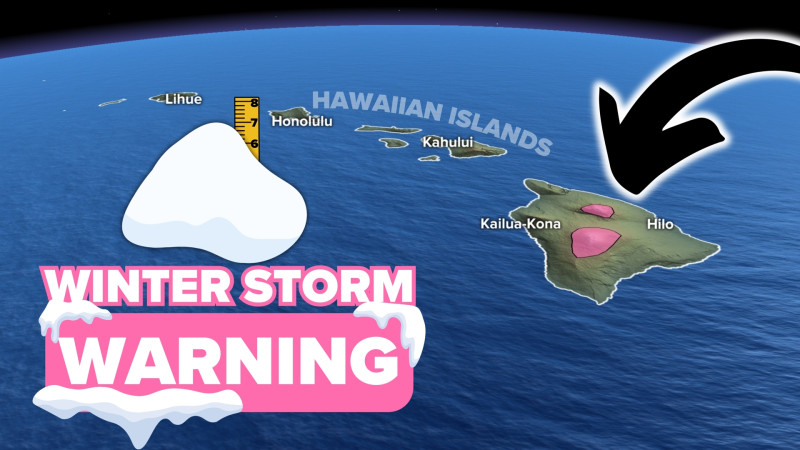
The tropical paradise of Hawaii found itself in a rare and unexpected scenario this January 2026, where heavy snowfall blanketed the summits of its iconic volcanoes. This extraordinary event, driven by a powerful system known as a Kona Low, has sparked both awe and curiosity among locals and tourists alike.
Hawaii's highest peaks, notably Mauna Kea and Mauna Loa, received a significant amount of snow, with accumulations ranging from 8 to 10 inches. This event is not entirely uncommon as snowfall occurs almost every winter on these volcanic peaks, due to their elevation and the cold temperatures that prevail at higher altitudes.
The Kona Low, a robust cold low-pressure system, intensified over Hawaii, leading to widespread heavy rainfall, thunderstorms, and wintry conditions at high elevations. The storm, positioned north of the Hawaiian Islands, gradually shifted southward, bringing a mix of weather conditions including heavy snowfall and ice on the summits of Mauna Loa and Mauna Kea.
Weather experts have issued winter storm warnings for the region, highlighting the potential for dangerous icy conditions and heavy snowfall. This phenomenon, although visually stunning, poses significant challenges for those navigating the mountainous terrain.
For residents and tourists who typically associate Hawaii with sunny beaches and warm tropical climates, the sight of snow-capped peaks is both fascinating and unexpected. The National Weather Service has been closely monitoring the situation, providing timely updates and advisories to ensure public safety.
Despite the rare occurrence, this event underscores the diverse and unpredictable nature of Hawaii's weather. The state's unique geography, characterized by towering volcanoes, results in a variety of microclimates that can produce such contrasting weather patterns.
Overall, the snow storm in Hawaii serves as a reminder of the state's natural beauty and the dynamic interplay between its tropical and wintery elements. As the snow melts and the warmer weather returns, it leaves behind a memorable and extraordinary chapter in the island's weather history, captivating both residents and visitors alike.
How does this story make you feel?
 Up next · ScienceRevolution Medicines: A Deep Dive into RVMD Stock