NASA and the International Space Station: 2026 Update
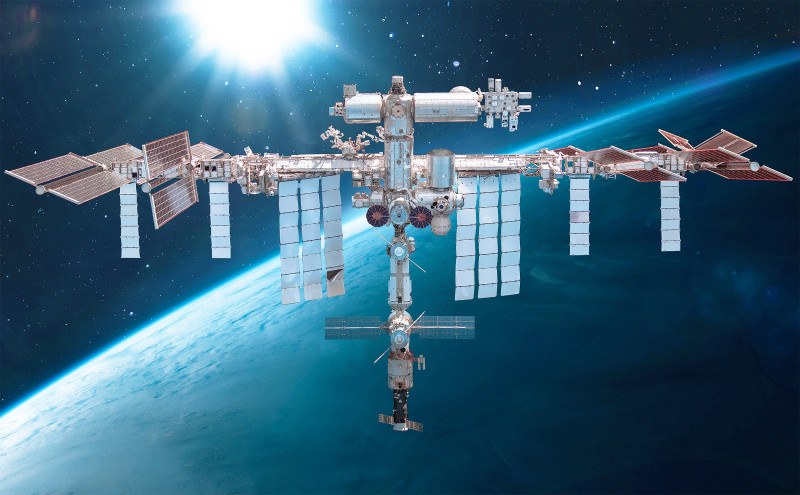
In 2026, the International Space Station (ISS) stands as a testament to humanity's remarkable achievements in space exploration, orchestrated by NASA and its international partners. This collaborative effort, involving space agencies from the United States, Russia, Europe, Japan, and Canada, has transformed the ISS into a pivotal hub for scientific research and human presence in low Earth orbit.
NASA's recent considerations for an early crew return from the ISS highlight the dynamic and often unpredictable challenges of space travel. On January 8, 2026, NASA announced that a medical issue involving one of the astronauts has prompted evaluations for an earlier-than-planned return [3,4,11]. This situation underscores the critical importance of crew safety and the meticulous planning required for missions that span hundreds of days in microgravity [7,8].
The ISS, a marvel of modern engineering, has been continuously inhabited for 25 years, marking a significant milestone in space exploration. This space station, often referred to as humanity's most expensive object, has become a platform for groundbreaking research that spans various scientific disciplines, from biology and astrophysics to materials science [5,9]. The ISS provides a unique environment for experiments that cannot be replicated on Earth, offering insights into the effects of microgravity on human physiology and technological systems.
Despite its successes, the ISS faces an uncertain future. NASA and its partners are actively planning the station's eventual retirement and deorbiting. The decision on how to safely deorbit the ISS is a complex task, involving detailed engineering and logistical considerations. The process will ensure that the station's disintegration does not pose a threat to Earth's environment or population.
In addition to its primary mission, the ISS serves as a powerful educational and inspirational tool, engaging the public through live video streams, social media, and educational programs. The Spot the Station app, for instance, allows users to track the ISS and receive notifications for viewing opportunities, fostering a sense of connection and wonder among space enthusiasts worldwide.
As NASA continues to navigate the challenges and opportunities presented by the ISS, the focus remains on leveraging this extraordinary laboratory for furthering our understanding of space and preparing for future missions, including potential human exploration of the Moon and Mars. The collaboration and technical expertise demonstrated by the ISS program are crucial in advancing space exploration and inspiring future generations of scientists, engineers, and astronauts [5,6,13].
In conclusion, while NASA grapples with current medical concerns and future plans for the ISS, the space station remains a beacon of international cooperation and scientific achievement. Its legacy will continue to influence space exploration for decades to come, embodying the spirit of discovery and innovation that defines humanity's journey into the cosmos.
How does this story make you feel?
 Up next · ScienceNASA's Latest Developments at the International Space Station