Experience the Northern Lights Tonight: A Comprehensive Guide
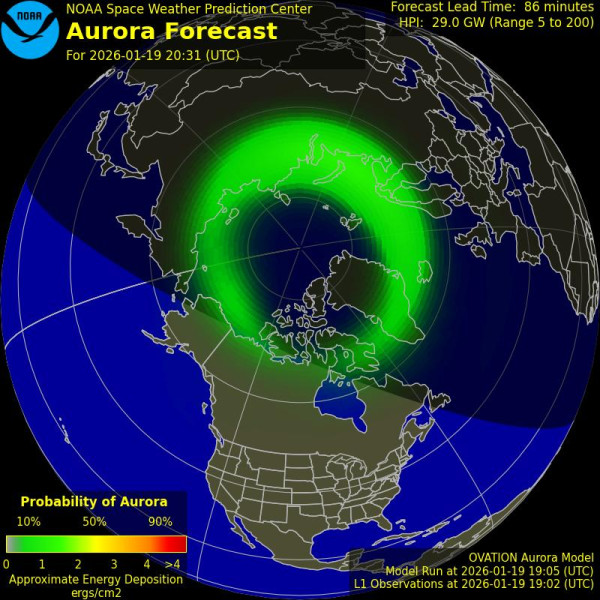
The Northern Lights, also known as aurora borealis, are a mesmerizing celestial phenomenon that has captivated observers for centuries. On January 19, 2026, the Northern Lights are set to put on a spectacular display, visible across various regions of the United States and beyond. Thanks to advanced forecasting techniques by organizations like NOAA (National Oceanic and Atmospheric Administration), enthusiasts can plan their viewing experience with precision.
To understand the visibility and intensity of the Northern Lights tonight, it's essential to delve into the forecasting mechanisms that make this possible. NOAA provides a comprehensive 3-Day Forecast, updated daily, that overlays the 27-Day Space Weather Outlook, offering a more accurate prediction of aurora activity. This detailed forecast helps in understanding the geomagnetic conditions that influence the visibility of the Northern Lights.
One of the key metrics used in predicting the Northern Lights is the Kp index, which measures geomagnetic activity on a scale from 0 to 9. A higher Kp index indicates stronger geomagnetic storms, which can result in more vivid aurora displays. Tonight, the Kp index will be crucial in determining the visibility and intensity of the Northern Lights across different regions.
For those in the United States, the Northern Lights may be visible in up to 24 states, stretching from Alaska to Colorado, as an incoming coronal mass ejection (CME) is expected to impact within 24 hours. This event, combined with favorable solar wind conditions, will create an optimal viewing environment for aurora enthusiasts.
Aurora hunters and stargazers can utilize various tools to enhance their viewing experience. Real-time aurora maps, such as those provided by the NOAA and other forecasting services, offer up-to-date information on aurora activity and visibility. These maps, powered by data from the Kp index and solar wind conditions, provide a comprehensive overview of where and when to see the Northern Lights tonight.
To get the most out of tonight's Northern Lights display, it's essential to consider factors like location, time, and weather conditions. The best viewing locations are typically in areas with minimal light pollution, such as national parks or rural settings. Additionally, cloud cover and moon phases can affect visibility, so checking local weather forecasts is crucial.
Overall, tonight promises to be a spectacular night for viewing the Northern Lights, with enhanced forecasts and real-time data providing an unparalleled viewing experience. Whether you're a seasoned aurora hunter or a first-time observer, the Northern Lights are sure to leave a lasting impression, reminding us of the grandeur and mystery of the natural world.
How does this story make you feel?
 Up next · EntertainmentReflecting on the "I Have a Dream" Speech: A Beacon of Hope and Equality