In the closing days of March 2026, the simmering tensions between Israel and Iran have boiled over into full-blown conflict. Israel and Iran have long been on a collision course, with ideological, territorial, and strategic disputes fueling the flames. But what seems to have sparked the current conflagration? Let’s dive in to understand the backdrop, the current state, and what the future might hold for this escalating Israel-Iran conflict.
Roots of the Conflict: A Decade of Hostility
The roots of the Israel-Iran conflict go way back. The ideological divide began with Iran’s 1979 Islamic Revolution, which saw Ayatollah Khomeini's rise to power and the subsequent shift in Iran's foreign policy toward an anti-Western, anti-Israel stance. The turning point came with Israel’s 2008 bombing of Syria, which was suspected of constructing a nuclear reactor with Iranian assistance. Since then, Israel has been conducting a series of covert operations, including the 2010 assassination of Iranian nuclear scientists and the 2012 bombing of a suspected Iranian nuclear facility in Syria.
Operation Epic Fury: The Escalation
Fast forward to 2026, where the conflict has reached a new level of intensity. On 28 February, the United States and Israel launched a joint military campaign, dubbed Operation Epic Fury, targeting Iran's missile infrastructure, military sites, and leadership in Tehran. This was not just a targeted strike; it was a broad regional conflict spanning multiple countries. Israel has conducted large-scale strikes on Tehran, including residential areas, while the US has hit over 5,000 targets inside Iran. The casualty count is mounting, with around 140 wounded and seven killed on the US side.
The Human Cost: A Toll on Civilians and Infrastructure
The human cost of this war is staggering. Iranian authorities have reported that more than 42,000 civilian units, including homes, commercial buildings, and schools, have been affected. Civilian casualties are high, with hundreds of teachers and students among those reported killed or injured. The conflict has displaced thousands, with the Iranian Revolutionary Guard warning people across the Gulf to evacuate areas near oil ports. The Foreign Minister Abbas Araghchi has also warned of attacks on US companies in the Middle East if Tehran's energy infrastructure is targeted.
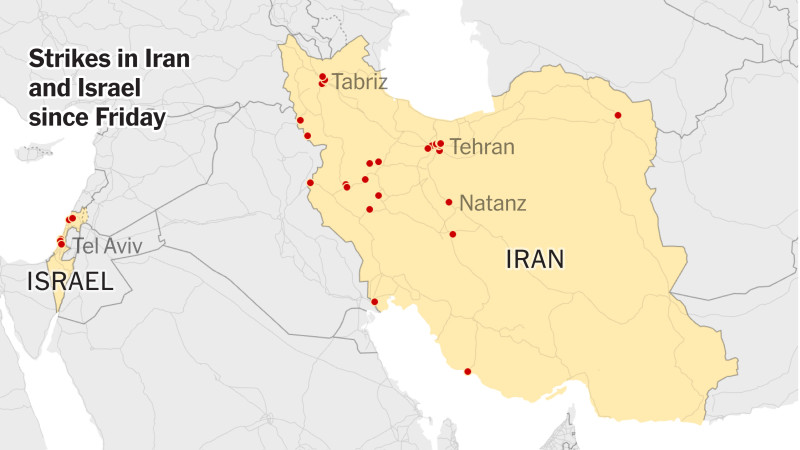
And then — get this — the conflict has spilled beyond the borders of Iran and Israel. Iraq's capital, Baghdad, has seen a projectile strike a house, wounding two people. This is not just a regional conflict; it's a global crisis, with potential ripple effects far beyond the Middle East. Look at the map of the Middle East; the red dots marking the conflict zones are spreading. Sound familiar? Remind you of anything?
In the midst of the chaos, the Israeli military has been relentless. On Saturday, they launched a new wave of airstrikes on Iran, while Iranian forces have been firing at US and Israeli targets in what seems to be an endless cycle of retaliation. In one particularly chilling detail, Iran's Kheibar Missile reportedly broke through Israel's Iron Dome, an advanced air defense system.
Here's the thing: the Israel-Iran conflict is not just about territory or ethnic disputes. It's about ideological hostility, a deep-seated enmity that has been festering for decades. As Iran's Kheibar Missile breaks through Israel's Iron Dome, we see the stark reality of a conflict that has long been debated and strategized. This is not a war that will end anytime soon.
As we wrap up this article, it's important to focus on the Israel-Iran conflict in a way that acknowledges the broader implications. The war is not just a tactical fight; it's about the future of the Middle East and the world. It’s about how we, as a global community, respond to escalating conflict and the human cost it entails. Iran and Israel have been at odds for decades, but this war feels different. It feels like a turning point, a moment where the world could tilt, depending on the outcome and the choices made by the global community. As Iran's Revolutionary Guard warns of further attacks, the world holds its breath, hoping for a resolution but preparing for the worst.
There’s no magic answer to stop this Israel-Iran conflict, but the fact that this conflict is more than just about Israel and Iran is stark. Iran and Israel have a long history of conflict, but it's the broader implications of the war that have the world on edge. The conflict is not just about territory or ethnic disputes. It's about ideological hostility, a deep-seated enmity that has been festering for decades. As we move forward, the world will be watching, hoping for a resolution, but preparing for the worst.
"There is a moment in the history of every conflict when the world can choose to intervene or watch things escalate. The current Israel-Iran war is in the hands of international diplomacy, and we all hope that cooler heads will prevail."