Tyler Hansbrough: The Controversial Pick for Miami-Ohio in March Madness
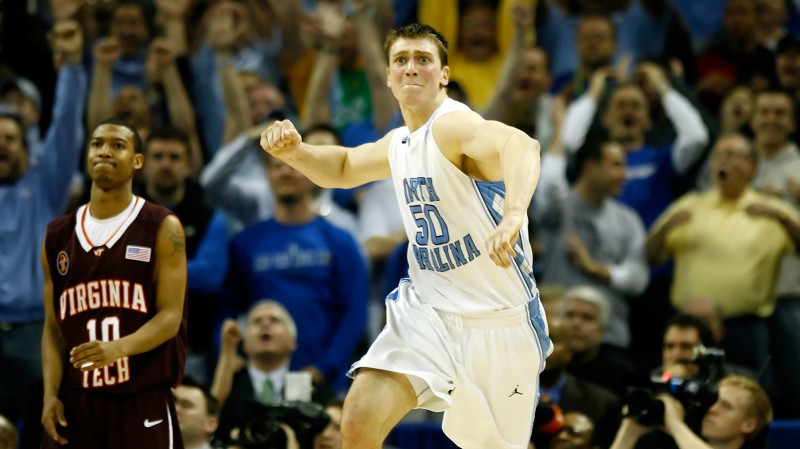
In the ever-evolving landscape of college basketball, few moments have sparked as much debate as Tyler Hansbrough’s scathing critique of Miami-Ohio’s inclusion in the 2026 NCAA Tournament. As the March Madness fervor reaches fever pitch, the former North Carolina legend is making waves with his outspoken criticism of a selection that has left many fans and analysts scratching their heads.
Tyler Hansbrough and Miami-Ohio's Controversial Inclusion: A Numbers Game
Hansbrough’s critique of the NCAA Tournament selection committee’s decision to include Miami-Ohio hinges on cold, hard numbers. The Miami RedHawks, according to Hansbrough, had a 339th-ranked strength of schedule and zero Quad 1 wins, a combination historically considered disqualifying for at-large bids. Hansbrough argues that Miami’s lack of impressive wins and weak schedule should have kept them out of the tournament, leaving the door open for teams like Oklahoma, who have shown late-season improvement. The committee, however, relied on Miami’s Wins Above Bubble ranking, which sat at 38th nationally, to justify their selection.
The controversy doesn’t end there. Hansbrough’s criticism has reignited a long-standing debate within the college basketball community: how much weight should be given to subjective metrics like Wins Above Bubble versus objective metrics like strength of schedule and Quad 1 wins? The selection committee’s decision to prioritize the former over the latter has drawn mixed reactions, with some fans and analysts agreeing with Hansbrough and others defending the committee’s approach.
Unpacking the Selection Committee’s Decision: Was Miami-Ohio Deserving?
Despite Hansbrough’s arguments, the selection committee maintains that Miami-Ohio’s inclusion was based on a comprehensive evaluation of their season. The committee’s justification rests on Miami’s Wins Above Bubble ranking, which measures a team’s performance relative to the bubble line for automatic bids. This metric, while not without its flaws, provides a different lens through which to evaluate a team’s season and is often used in conjunction with other metrics to determine tournament eligibility.
One of the most contentious aspects of the selection process is the balance between objective data and subjective judgment. While Hansbrough’s emphasis on strength of schedule and Quad 1 wins is rooted in hard data, the selection committee’s decision to consider other factors highlights the nuanced nature of this process. The debate, however, underscores a broader question: should the selection process for March Madness prioritize objective metrics or subjective judgments, and if so, to what extent?
Tyler Hansbrough: The Voice of Criticism and the Future of the Tournament
Hansbrough, a revered figure in college basketball, has made no secret of his disapproval of the selection committee’s decision. His criticism has added fuel to the fire, sparking a national conversation about the fairness and accuracy of the selection process. But think again. Hansbrough’s critique isn’t just about Miami-Ohio; it’s about the future of the tournament and the metrics used to determine its participants. Who decides on the metrics? The committee? The fans? The media?
As the NCAA Tournament unfolds, the spotlight remains on Miami-Ohio and the selection committee’s decision. The RedHawks, now under intense scrutiny, will have to prove themselves on the court. Can they live up to the expectations set by their inclusion, or will Hansbrough’s criticism be validated on the hardwood?
“The most important part of the game is the result, and if Miami-Ohio can pull off some upsets, the controversy may fade. But if they struggle, the selection committee will have some explaining to do.”
The controversy surrounding Miami-Ohio’s inclusion in the 2026 NCAA Tournament serves as a reminder that the selection process is far from perfect. As the debate continues, one thing is clear: the voice of criticism, embodied by Tyler Hansbrough, will play a significant role in shaping the future of the tournament. Gone. The court of public opinion may be more unforgiving than the hardwood.
How does this story make you feel?
 Up next · SportsBraden Smith: The Assist King on the Brink of History