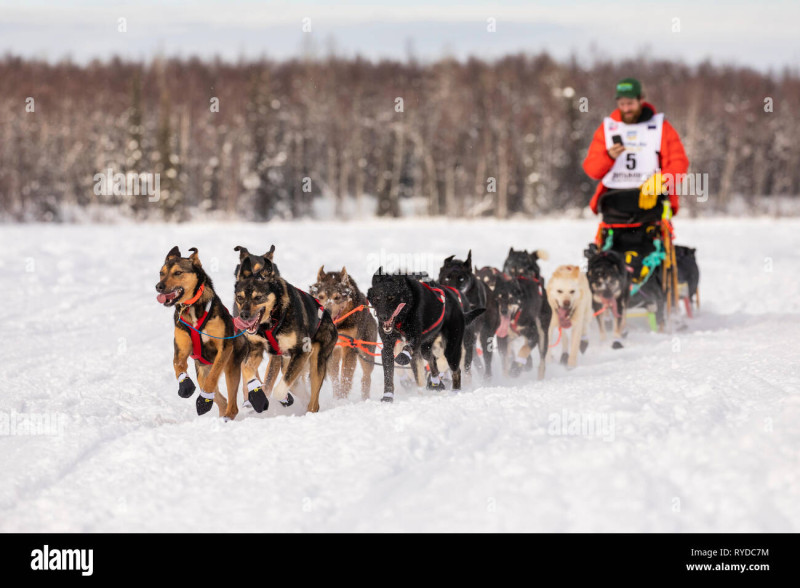
In the heart of Alaska's frozen wilderness, Jessie Holmes has once again etched his name in the annals of endurance and grit, triumphing in the grueling 2026 Iditarod Trail Sled Dog Race. This victory not only solidified his status as a champion but also cemented a rare feat in the race's storied history. Only five other mushers have achieved the double victory in the 54 years of the Iditarod.
Holmes' Historic Double Victory
The 2026 Iditarod Trail Sled Dog Race was a testament to Holmes' unparalleled skill and determination. The veteran musher, hailing from Brushkana, Alaska, crossed the finish line in Nome on the night of March 17, 2026, securing his second consecutive Iditarod championship. This monumental achievement places him in an elite category, joining the ranks of legendary mushers who have successfully defended their titles. His victory was particularly poignant, given the arduous nature of the 1,000-mile race through some of the most unforgiving terrain in the world.
The Challenging Path to Victory
Holmes' journey to the finish line was fraught with challenges, both physical and mental. The Iditarod is notorious for its harsh conditions, including blizzards, treacherous trails, and unpredictable weather. Holmes, however, navigated these obstacles with a blend of experience and strategic planning. His ability to manage his team of sled dogs and make critical decisions under immense pressure was evident throughout the race. Notably, his departure from Elim after a 3-hour rest, and his subsequent progress towards Nome, highlighted his tactical prowess.
The data is damning: Holmes' consistency and resilience during the race are unparalleled. His ability to maintain a steady pace, even through the most challenging stretches, underscores his exceptional athletic and mental fortitude. The grueling nature of the Iditarod demands not just physical endurance but also a deep understanding of the terrain and the behavior of the sled dogs. Holmes' expertise in these areas was crucial to his success.
As Jessie Holmes celebrated his victory with his lead dogs, Zeus and Polar, it became clear that his triumph was more than just about personal glory. It was a testament to the resilience and spirit of the mushers who brave the Iditarod each year.
The Impact of a Double Victory
Holmes' victory has far-reaching implications for the sport of mushing and the Iditarod Trail Sled Dog Race. As the third competitor in the 54-year history of the race to repeat the year after winning for the first time, he sets a new benchmark for future mushers. His back-to-back victories serve as an inspiration for aspiring mushers, showcasing the importance of perseverance, strategic planning, and a deep connection with the dogs. Let's not kid ourselves, Holmes' double victory is a monumental achievement that highlights the enduring spirit of the Iditarod.
Even those who admire Holmes' commitment to the race and the sport- can't deny the physical and emotional toll it takes on the competitors. Critics might argue that the intense physical demands and prolonged isolation during the race can lead to burnout and other health issues. However, Holmes' resilience and determination to push through these challenges are a testament to his dedication and passion for the sport. Here's what nobody's asking: How sustainable is this level of commitment for the mushers, and what measures can be taken to ensure their well-being?
As the 2026 Iditarod Trail Sled Dog Race concludes, the spotlight remains on Jessie Holmes, whose historic double victory has left an indelible mark on the race's history. His triumph stands as a beacon for future mushers, showcasing the resilience and spirit essential to conquering one of the world's most challenging endurance events.