Today Marks the Arrival of Spring's First Day in 2026
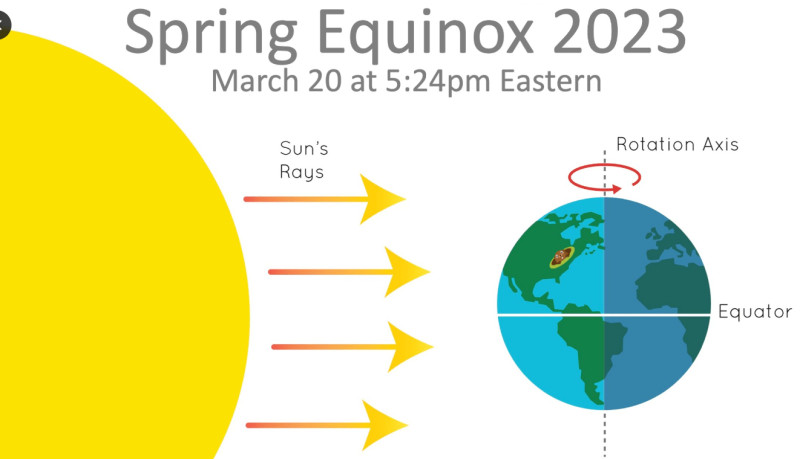
Today, March 20, 2026, the Northern Hemisphere welcomes the first day of spring. The vernal equinox is upon us, bringing with it almost equal day and night lengths and a shift in the Earth's orbit that signals the start of the season of renewal.
Understanding the Vernal Equinox: What Exactly Happens Today?
Today, at 10:46 a.m. Eastern Time, the sun crossed the celestial equator, marking the vernal equinox — the precise moment when spring officially begins in the Northern Hemisphere. This celestial event isn't just a marker for the changing of the seasons; it also signifies a shift in the Earth's tilt, which brings about longer days and warmer temperatures.
Could this be the Last Time we Celebrate Today's Equinox?
Let's not kid ourselves, the change in seasons is a natural phenomenon that has been celebrated for centuries. However, it is worth noting that the exact date of the spring equinox can vary slightly each year, shifting by a day or two due to the Earth's elliptical orbit and the gravitational influences of the moon and other planets. In 2026, we're lucky that the equinox falls on a Friday, giving us a full weekend to celebrate the transition from winter to spring.
Meteorological vs. Astronomical Spring: Which is More Accurate?
There are two schools of thought when it comes to determining the start of spring. Meteorologists define spring as the period from March 1 to May 31, based on annual temperature cycles and the steady march of the seasons. However, astronomers use the vernal equinox to mark the beginning of spring, focusing on the precise moment when the sun crosses the celestial equator. But here's what nobody's asking: does it even matter? The shift in seasons is a natural process, and measuring it by either method is a celebration of the Earth's cyclical beauty.
So, as we welcome the first day of spring today, let's savor the longer, warmer days while they last. Because as the saying goes, "Spring may be the most beautiful season, but it is also the most fleeting." And as the days grow longer and warmer, take a moment to appreciate the beauty of the natural world as it awakens from its winter slumber.
How does this story make you feel?
 Up next · EntertainmentStrands Frenzy: Unlocking Today's Spring Fever Puzzle