Apollo 11: The Giant Leap that Defined a Generation
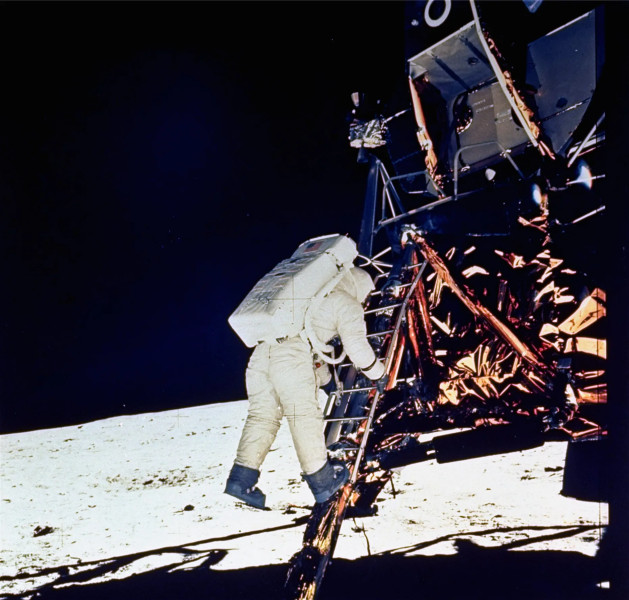
The clock in Mission Control was ticking down to zero. In the fluorescent glare of the briefing room, thousands of miles away from Houston, Texas, a room full of engineers and scientists held their breath. The hum of phones buzzing in pockets and the whispers of anxious chatter underlined the tension. This was no ordinary day — this was July 20, 1969, and the world was about to witness the most historic event of the Apollo 11 mission—the first human steps on the moon.
The Launch and the Journey to the Moon
The Apollo 11 mission began on a sweltering July 16, 1969. A Saturn V rocket, the most powerful ever built, roared to life and blasted off from Kennedy Space Center. Strapped inside the command module were Commander Neil Armstrong, Command Module Pilot Michael Collins, and Lunar Module Pilot Edwin "Buzz" Aldrin. This crew was on a mission that would forever change the course of human history.
The journey to the moon was fraught with challenges. The spacecraft had to perform a series of precise maneuvers to enter lunar orbit. After 75 hours in space, the spacecraft was caught in the moon's gravity and safely entered its orbit. On July 20, Armstrong and Aldrin prepared the lunar module, named Eagle, for descent. The lunar module descended to the surface of the moon, while Collins remained in orbit aboard the command module, Columbia. — The descent was perilous, with alarms blaring and fuel running low, but Armstrong's steady hand and calm demeanor guided the craft safely to the lunar surface.
First Steps on the Moon
The world watched in awe as the lunar module Eagle touched down in the Sea of Tranquility. Armstrong radioed back to Mission Control, "Houston, Tranquility Base here. The Eagle has landed." Half an hour later, the hatch opened, and Armstrong made his historic descent to the lunar surface. As he stepped off the ladder, he uttered the immortal words, "That's one small step for [a] man, one giant leap for mankind." Aldrin followed shortly after, becoming the second human to walk on the moon. Their steps on the lunar surface marked the culmination of the Space Race and a massive national commitment by the United States to beat the Soviet Union in putting people on the Moon.
The Apollo 11 astronauts spent approximately two and a half hours outside the spacecraft, collecting lunar material to bring back to Earth, planting the American flag, and leaving behind a plaque that read, "Here men from the planet Earth first set foot upon the Moon, July 1969 A.D. We came in peace for all mankind."
"The Eagle has landed." The words spoken by Neil Armstrong as he stepped onto the lunar surface are etched in history, a testament to human achievement and the culmination of years of relentless effort and innovation.
The Return to Earth
After a successful lunar exploration, Armstrong and Aldrin blasted off from the moon's surface and rejoined Collins in lunar orbit. The journey back to Earth was uneventful, and the command module splashed down in the Pacific Ocean on July 24, 1969. The Apollo 11 mission had accomplished its goal, and the world celebrated the triumph of human ingenuity and determination.
Yet, the mission's legacy extends far beyond the historic first steps on the moon. The Apollo 11 mission marked a turning point in human exploration, paving the way for future missions and inspiring generations of scientists, engineers, and explorers. The technological advancements and scientific discoveries made during the mission continue to influence space exploration today.
As NASA looks to return humans to the moon and even venture to Mars, the spirit of Apollo 11 lives on. With the Apollo 11 mission, humanity took a quantum leap forward, proving that the sky is not the limit but merely the beginning of our cosmic journey.
But what comes next for space exploration? The next big leap is about to be made. It’s 2026, and the future of lunar exploration is poised to take flight, pushing the boundaries of what's possible and inspiring a new generation of pioneers to reach for the stars. And who knows? Perhaps the next giant leap will be made by an astronaut standing on the dusty red surface of Mars.
How does this story make you feel?
 Up next · ScienceFull Pink Moon Tonight: What You Need To Know