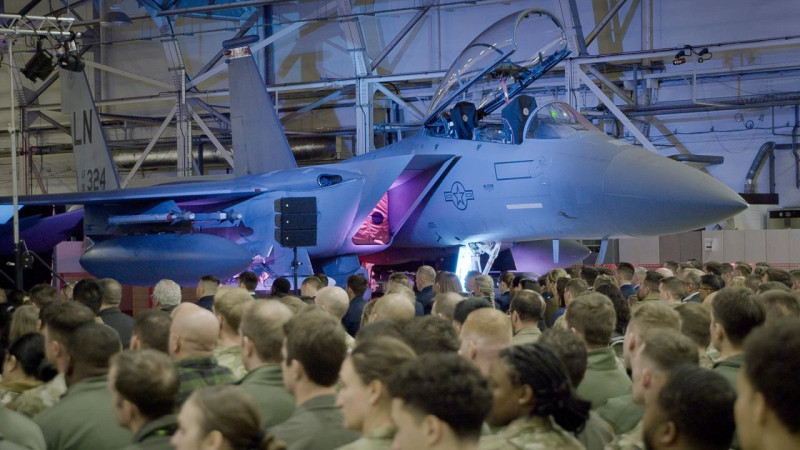
In the ever-evolving geopolitical landscape of 2026, the F-15, a stalwart of U.S. Air Force operations, finds itself at the center of a whirlwind of controversy and misinformation. Recent claims and counterclaims regarding the shootdown of a U.S. F-15 fighter jet over Iran have left both military analysts and the public scrambling for clarity. With unsubstantiated rumors and unverified images circulating, the situation is a tangled web of speculation and disinformation.
The claims: Iran says it shot down a U.S. F-15
Iranian authorities have been quick to assert that their air defenses successfully targeted and shot down a U.S. F-15 fighter jet. The Iranian state media reported that the incident occurred near Hormuz Island, a strategically significant location in the Persian Gulf. Videos and images purportedly showing the wreckage of the downed jet have been circulated, but their authenticity remains a subject of debate. Iranian officials have gone so far as to claim that the jet was an F-35, a more advanced and stealthy aircraft, although analysts suggest the wreckage resembles that of an F-15E Strike Eagle.
The counterclaim: The U.S. denies the shootdown
On the other side of the aisle, the U.S. Central Command (CENTCOM) has vehemently denied the Iranian claims, asserting that no F-15 has been shot down over Iran. According to CENTCOM, the rumors are part of a deliberate disinformation campaign aimed at sowing confusion and mistrust. The U.S. has also clarified that any incident involving a U.S. F-15 would be thoroughly investigated, and the public would be informed accordingly.
Here's the thing: Iran's claims could be a strategic move to assert their military prowess and deter further U.S. operations in the region. Or it could be a genuine incident gone awry, with both sides struggling to manage the fallout. Sound familiar? Remind you of anything?
The friendly fire fiasco
In a bizarre twist, three U.S. F-15s were involved in a friendly fire incident over Kuwait, where Kuwait's air defenses accidentally shot down the American jets. The incident highlights the complexities and dangers of modern air combat, where friendly fire can sometimes be as lethal as enemy fire. Kuwait's air defenses, likely on high alert due to regional tensions, appear to have misidentified the F-15s as hostile targets. This incident underscores the need for improved communication and identification protocols to prevent such tragic mishaps in the future. And then — get this — it wasn't even the first time.
The F-15 has a storied history, with numerous losses and accidents documented over the years. The aircraft's design and capabilities have made it a workhorse for the U.S. Air Force, but it is not without its vulnerabilities. The ongoing tensions in the Middle East and the rapid advancements in military technology continue to test the F-15's limits and capabilities.
"The Iranian claims about shooting down a U.S. F-15 fighter jet are part of a broader disinformation campaign aimed at destabilizing the region and undermining U.S. military operations," said a senior military analyst, speaking on condition of anonymity.
As the situation continues to unfold, one thing is clear: the F-15 remains a critical asset in the U.S. military arsenal, but its future operations will be closely watched in the face of mounting disinformation and potential threats. The truth, as they say, is often the first casualty of war. And in this case, the truth about the U.S. F-15 shootdown remains elusive, shrouded in a fog of conflicting narratives and unverified claims.
It's also a stark reminder that modern warfare is as much about perception and disinformation as it is about brute force and firepower. The F-15 has always been a symbol of American military might, but in the age of information warfare, even the most advanced fighter jets are not immune to the vagaries of misinformation and disinformation.