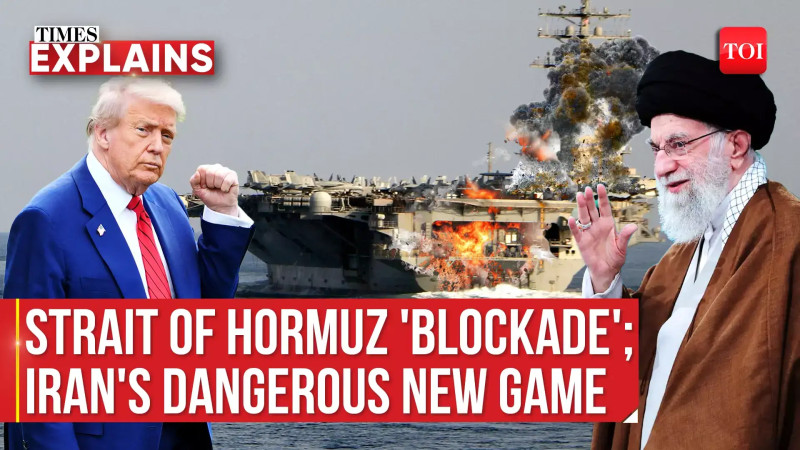
The Strait of Hormuz, a narrow passageway between Iran and the Arabian Peninsula, is more than just a geographical feature. It is a chokehold on global trade, controlling 20% of the world's oil supply. This strategic waterway is the epicenter of current geopolitical tensions, where every vessel, every barrel of oil, and every diplomatic move is scrutinized under a global spotlight. Recent developments have thrust the strait into the headlines, with President Trump declaring an imminent U.S. blockade in response to stalled peace talks with Iran.
Strait of Hormuz: The Epicenter of Geopolitical Tensions
The Strait of Hormuz is a strategic waterway linking the Persian Gulf to the open ocean, making it a critical route for international oil shipments. With nearly 20% of the world's oil passing through its narrow channels, any disruption in this passageway can send shockwaves through global markets. The recent blockade announcement by Trump has underscored its significance, as the U.S. Navy prepares to intercept vessels that have paid tolls to Iran. The blockade isn't just a military maneuver; it's a chess move in a larger geopolitical game that involves Iran, the U.S., and the rest of the world, each with their own agenda and interests.
Trump's Ultimatum: A Naval Blockade and Its Implications
The U.S. President's declaration of a naval blockade in the Strait of Hormuz comes after the collapse of high-stakes peace talks with Iran. Trump's announcement has set the stage for a new chapter in the ongoing strait of Hormuz crisis, where military strikes and diplomatic efforts intertwine. This blockade, if implemented, would have far-reaching implications for global oil flows and the economies of nations dependent on Middle Eastern oil. The Strait of Hormuz crisis has already seen a surge in oil prices and economic strain, as indicated by the number of nations meeting to address the blockade's impact.
The blockade is not the first of Trump's suggestions for reopening the Strait of Hormuz, but it is certainly one of the most dramatic. Previous proposals have included negotiations and economic pressures, but the current stance reflects a more aggressive approach. The complexity of the situation is further exacerbated by Iran's actions, which include imposing fees on vessels passing through the strait and restricting access to a handful of Iran-linked ships.
Global Markets on Edge: Dow Jones Futures Reflect Uncertainty
Trump's blockading of the strait of hormuz has sent ripples through global financial markets. The Dow Jones Futures have become an indicator of investor sentiment, reflecting the uncertainty and potential impact of the blockade. With oil prices already on the rise due to the crisis, the markets are bracing for further volatility. The blockade's implications for global trade and energy supplies have left investors and analysts alike in a state of heightened alert.
As the strait of hormuz news unfolds, the world watches, waiting for the next move in this high-stakes game of diplomacy, military strategy, and economic maneuvering. The blockade is not just a naval exercise; it is a testament to the interconnectedness of global economics and geopolitics, where a single waterway can hold the world's attention. The blockade, if enforced, will not only affect oil supplies but also the delicate balance of power in the Middle East, where every move is met with strategic countermeasures.
The real-time scenario of the strait of hormuz news and the U.S. blockade has brought the geopolitical chessboard into sharp focus. The intricacies of the situation are best summed up by a quote from a diplomatic source, “This isn't just about oil; it's about who controls the world's lifelines.”