In the dimly lit corridors of the U.S. Capitol, the atmosphere is tense. The clock ticks ominously towards April 20, 2026, the deadline for renewing a controversial surveillance tool known as FISA Section 702, a key component of the Foreign Intelligence Surveillance Act. House Speaker Mike Johnson is navigating this delicate political landscape with a razor-thin majority, faced with a rebellion within his own party. "It's like walking a tightrope," one Republican aide confided, "and one misstep could bring the whole thing crashing down."
Understanding FISA Section 702: The Surveillance Tool Under Scrutiny
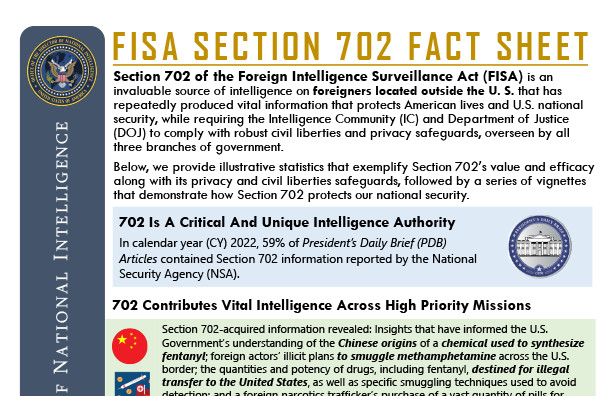
FISA Section 702 is a critical component of the U.S. government's surveillance toolkit, allowing intelligence agencies to monitor the communications of foreign targets without a warrant, even if those targets communicate with Americans. This provision has been a cornerstone of national security efforts, enabling agencies to gather intelligence on foreign threats. However, it has also raised significant privacy concerns, as it allows for the incidental collection of American communications. The debate over FISA 702 is not just about national security; it is a battle between liberty and safety, a tug-of-war that has divided Congress and the American public for years.
Mike Johnson: Navigating the Political Minefield
House Speaker Mike Johnson is at the epicenter of this political storm. His challenge is daunting: to renew FISA 702 without jeopardizing his narrow majority. The stakes are high, and the speaker's office is under intense pressure. "We're doing everything we can to find a compromise, but it's a delicate balancing act," a source close to Johnson revealed. The Speaker has been engaged in high-stakes negotiations, even heading to the White House for a briefing on the surveillance authority, hoping to secure the necessary votes. But the road is fraught with obstacles, as conservative hardliners threaten to derail the process. "We can't let this go unchecked," one conservative lawmaker stated firmly, echoing the sentiments of many who view FISA 702 as a privacy invasion.
"
This is a critical moment for our national security, but it's also a test of our democratic principles. We need to ensure that our surveillance tools are effective but also respectful of privacy rights," commented Senator Lisa Murkowski, highlighting the delicate balance that lawmakers are grappling with.
The Battle for FISA 702 Renewal: A Clash of Ideologies
The FISA 702 renewal vote is more than just a procedural formality; it is a battlefield where different ideologies clash. On one side, there are those who argue that FISA 702 is essential for national security, allowing agencies to stay ahead of threats. On the other side, there are those who view it as an overreach, a tool that compromises the privacy rights of American citizens. The debate has been intense, with both sides presenting compelling arguments. "This is about more than just renewing a piece of legislation; it's about the future of our surveillance policies and the rights of American citizens," said Representative Alexandria Ocasio-Cortez, underscoring the gravity of the situation.
As the deadline approaches, the tension in Congress is palpable. The outcome of this vote will have far-reaching implications, not just for national security but also for the future of privacy rights in the digital age. It is a moment of truth for Mike Johnson and his party, a test of leadership and compromise.
In the dimly lit chambers, the Speaker stood amidst closed doors. Silence reigned, the weight of the decision heavy in the air. The clock ticked, echoing the urgency of the moment, as the future of FISA 702 hung in the balance.
This is a story about more than just a vote—it’s a tale of power, privacy, and the delicate balance between security and liberty. The fight for FISA 702 is far from over, but one thing is clear: the outcome will shape the future of surveillance in America.