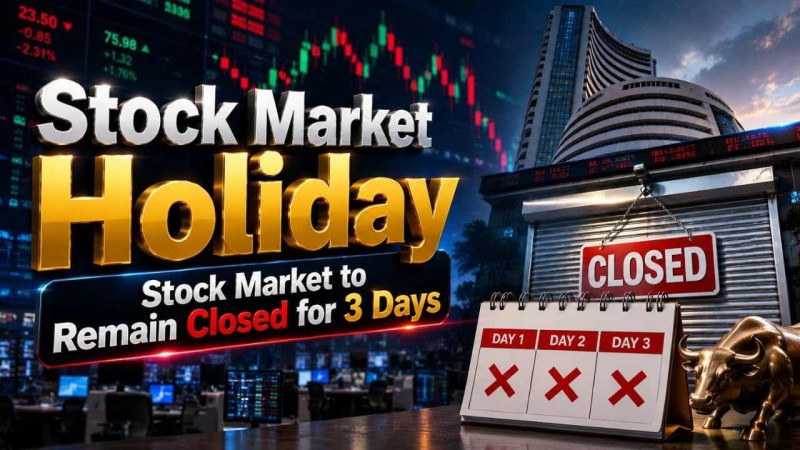
Let's get straight to the point. Is the stock market open on July 3, 2026? The answer is no. The Fourth of July is a major holiday for many Americans, and because it falls on a Saturday in 2026, Friday, July 3, 2026, is observed as the federal holiday, leading to a market closure. However, the broader implications of this closure on the financial landscape and everyday life for Americans are more nuanced.
Investing in America: How the Holiday Affects the NYSE and NASDAQ
When it comes to trading, Independence Day 2026 presents a unique scenario. The holiday falls on a Saturday, but the markets will close on Friday, July 3, 2026, to observe the national holiday. This means that the stock market is closed on July 3, 2026, giving investors a much-needed break. But let's not kid ourselves, the market's closure is just the tip of the iceberg. This extended weekend means that the markets are essentially closed for three days, from July 3 through July 5, 2026. This closure is nothing new to the financial markets. The US equity and derivatives markets have a long history of observing federal holidays, and July 4th is no exception.
Beyond the Markets: Banks, Mail, and Everyday Life
While the stock market closure might be a relief for traders, let's break it down further. If you're wondering, is there mail on July 3, 2026? The answer is no. The United States Postal Service (USPS) will not deliver mail on July 3, 2026, due to the federal holiday. This means that any packages or letters you've been waiting for will have to sit tight until July 6, 2026. Imagine the chaos that could ensue if the markets were open, but the mail service was not. It's a logistical nightmare we can all be grateful to avoid. However, this is not just a problem for the financial sector. Banks are also closed on July 3, 2026, adding another layer of complexity to everyday life. It's a stark reminder of how interconnected our financial systems are and how a single holiday can ripple through the entire economy.
The irony of the situation is palpable. While the markets remain closed for a well-deserved break, the rest of the world continues to operate. Costco, for example, will be open on July 3, 2026, as they typically remain open on most holidays. Let's face it, even if you don't have the market to trade, you can still stock up on food and household essentials.
But here's the kicker: what happens when July 4 falls on a weekend and the stock market is closed? Let's not forget that the July 3 closure is just a symptom of the larger issue. Federal holidays are often observed on the preceding Friday, and this year is no different. The challenge for investors and institutions alike is to navigate this three-day trading break and be prepared for the market to reopen on Monday, July 6, 2026. The data is damning, investors are left to grapple with the uncertainty of a market closure during the week. But let's not forget that this is just one of the many challenges that investors in America face.
For all the uncertainties and logistical challenges, the closure of the stock market on July 3, 2026, is a good reminder of the interconnectedness of our financial systems. It's a sign that, despite the chaos, the market continues to function and evolve, and it's up to investors and institutions to adapt and thrive in this ever-changing landscape. But here's what nobody's asking: what happens when the holiday falls on a weekend and the markets are closed for three days? This is a question that investors in America need to grapple with, and the answer is not as straightforward as it might seem.
The market's closure on July 3, 2026, is a stark reminder of the interconnectedness of our financial systems and the challenges that investors and institutions face in navigating these complexities. Here's to hoping that the market reopens on Monday with a bang, and that investors are prepared for the volatility that comes with a three-day trading break.