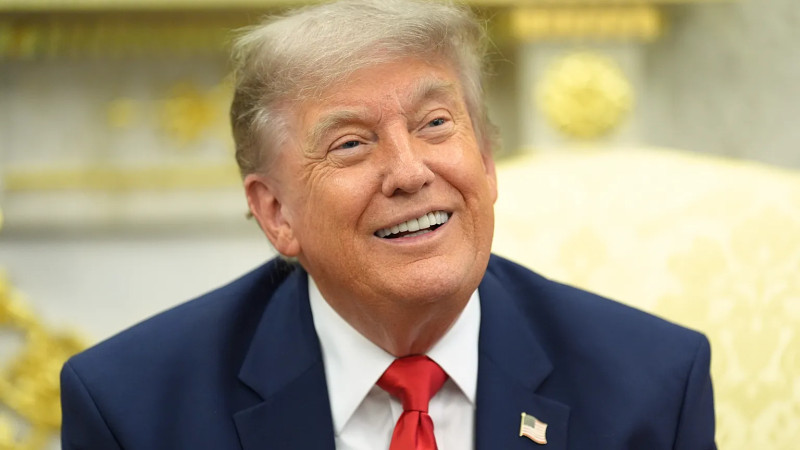
Under the inflexible gaze of America’s Founding Fathers, President Donald Trump stood on the National Mall to deliver a speech that, like the weather, was as politically charged as it was historically significant. July 4, 2026, was not just a celebration of America’s 250th anniversary, but a stage for Trump's vision of a country under a storm of change. The day began with the Great American State Fair delayed due to weather, setting a stormy tone for the evening’s festivities.
The Stormy Prelude to Trump's Speech
In the hours leading up to the event, the weather was as unpredictable as the political climate. The Great American State Fair, a high point of the celebration, was delayed. President Trump, undeterred, waited for the weather to clear. Originally slated for 9:45 p.m. ET, the speech was pushed back due to inclement weather, with Trump stating “We will wait it out, I don't care if it's 2:00 O'Clock in the morning, or in one hour from now”. This delay mirrored the unpredictable nature of the day, only highlighting the resilience and determination of the organizers and the attendees.
Weathering the Storm: A Night of History and Controversy
July 4, 2026, was a night of historical milestones, marked by the 250th anniversary of the United States. Despite the inclement weather and the delayed start, President Trump finally took the stage at 11 p.m. ET. Trump's speech, often obscured by the downpour, was broadcast live and featured a mix of patriotism and partisanship, using the occasion to celebrate not just America's founding, but his own achievements as well. In a symbolic move, Trump compared the weather that night to the challenges faced by veterans on D-Day. He asserted, “If the veterans could storm the beaches of Normandy on D-Day, he could give his Independence Day address in bad weather".
As the fireworks lit up the Washington D.C. sky, Trump's speech became a blend of historical retelling and political messaging, with the stormy conditions adding an unexpected layer of drama. The night's weather, a symbol of nature’s unpredictability, seemed to echo the political storm brewing in the country, with many eagerly anticipating what Trump would say next.
The Echoes of Trump's Rushmore Rhetoric
Just as the July 4th speech was overshadowed by the weather, Trump's previous speech at Mount Rushmore in 2020 was marked by a different kind of storm. With the COVID-19 pandemic raging and the nation in a state of unrest, Trump used the historic backdrop to deliver a speech that was both celebratory and divisive. He emphasized America's "golden age" and attacked communism, framing the present as a battle between freedom and oppression. Trump's rhetoric that night was a blend of patriotism and polarizing politics, much like his July 4th speech on the National Mall.
“A few weeks ago, we were in Mount Rushmore for an incredible event, and tonight we’re here for a different event, and yet we’re celebrating the same thing, the birthday of America,” Trump stated, linking the two moments in a seamless narrative. This continuity in Trump’s messaging underscored his approach to leveraging historical anniversaries as opportunities to advance his political agenda, weaving together themes of national pride and personal triumph.
“If the veterans could storm the beaches of Normandy on D-Day, he could give his Independence Day address in bad weather” — Trump, in a phone interview with Bret Baier, Fox News.
With July 4, 2026, being a pivotal moment in American history, grappling with the challenges of the stormy weather and delayed events, Trump’s speech left an indelible mark on the nation’s psyche. As the fireworks lit up the sky over Washington, D.C., the true fireworks were the political and ideological debates sparked by the President’s words. The question remains: how will this speech, and the controversies it ignited, shape the future of American politics?