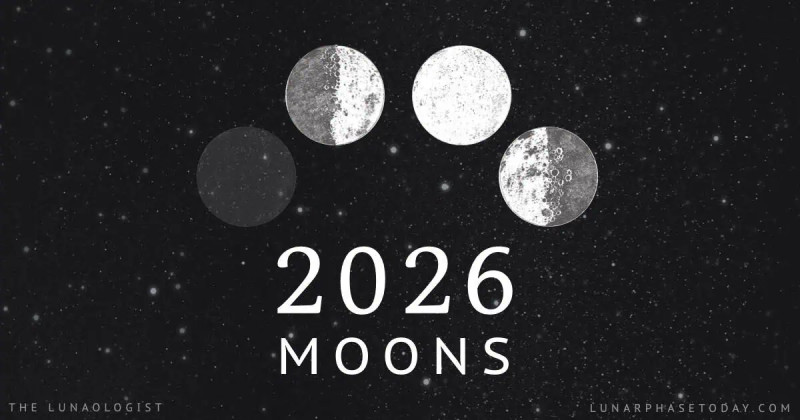
The night sky is set to dazzle with a spectacular celestial event, as a total lunar eclipse unfolds on March 3, 2026. Often referred to as a blood moon due to the moon's deep crimson hue during the eclipse, this event marks a moment of astronomical fascination and beauty.
For stargazers and astronomy enthusiasts, this lunar eclipse is a rare occurrence, as it will be the last total lunar eclipse visible from Earth until the New Year 2029. The eclipse will be visible from various regions including North America, some Pacific islands, Australia, and parts of East Asia.
This celestial event coincides with the full moon on March 3, 2026, which is also known as the Worm Moon. The Worm Moon gets its name from the earthworms becoming more active in the soil as the weather warms up. The phenomenon occurs when the Earth, Moon, and the Sun align in a straight line, with the Earth blocking the Sun's light from reaching the Moon.
The timing of the eclipse is precise, with the totality phase happening in the early hours, making it a perfect opportunity for early risers and night owls to witness the awe-inspiring spectacle. The penumbral phase begins at 6:04 AM and ends at 7:02 AM, while the umbral phase starts at 6:44 AM and ends at 6:52 AM, making it a brief yet captivating experience.
The next full moon after the March 2026 Worm Moon will occur on April 1, 2026, providing another opportunity for stargazing enthusiasts to marvel at the night sky.
If you're planning to watch the eclipse, remember that the best viewing conditions are in Western North America, Australia, New Zealand, and East Asia, where the eclipse will be most visible.
As we look forward to the next full moon in 2026, the upcoming total lunar eclipse serves as a reminder of the natural beauty and wonder that the universe has to offer.