A 4.1-magnitude earthquake struck southeast Nebraska near the town of Cowles on Sunday. The seismic activity was centered about 3 miles east of Cowles, a small village in Webster County, according to the United States Geological Survey (USGS). The event was felt across a wide area, including parts of southwest Iowa and as far north as Lincoln, the state capital, located approximately 135 miles from the epicenter. This was one of three earthquakes to hit the region on Sunday, with the other two being much weaker, registering magnitudes of 2.6 and 1.5, respectively.
The earthquake occurred at approximately 1:59 p.m. local time, sending shockwaves through the region. The depth of the quake was relatively shallow, at around 3.0 kilometers, which likely contributed to its widespread impact. Residents in towns as far as Kenesaw in Nebraska and Council Bluffs and Glenwood in Iowa reported feeling the tremors, highlighting the significant reach of the event.
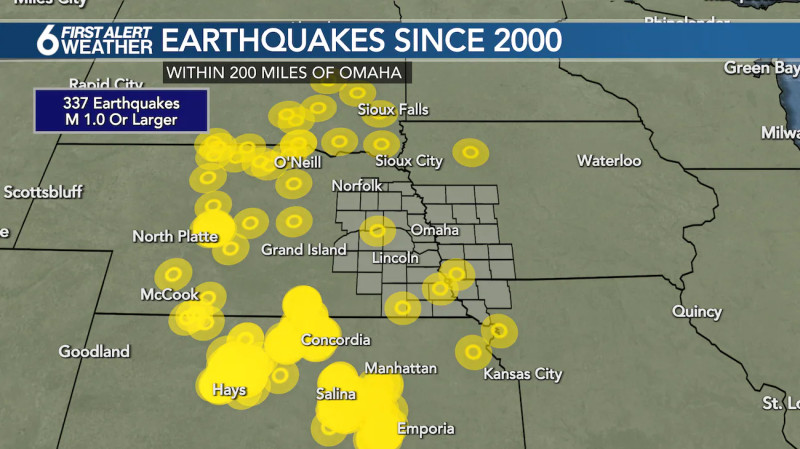
The USGS has provided an interactive map where residents can report their experiences and contribute to the data pool, aiding in the understanding and assessment of the earthquake's effects. Given the relatively low frequency of earthquakes in Nebraska, this event has drawn considerable attention from both local residents and seismic experts. The state typically experiences minor seismic activity, with most earthquakes registering below a magnitude of 3.0.
While the 4.1-magnitude earthquake may not have caused significant damage, it serves as a reminder of the potential for seismic activity in a region not typically associated with earthquakes. The event has sparked interest and concern among residents, who are now more aware of the possibility of future seismic events in the area. The USGS continues to monitor the situation and provides real-time updates on any new developments or aftershocks. For those in Omaha and other parts of the state, this event underscores the importance of being prepared for unexpected natural phenomena, even in areas not traditionally considered seismic hotspots.