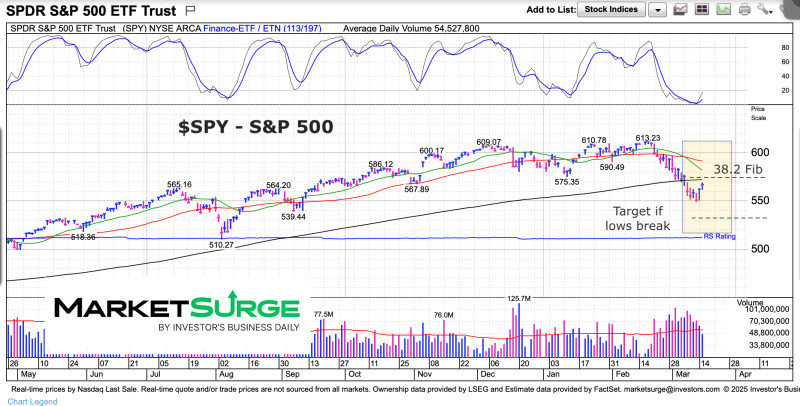
In the world of investments and finance, the SPY stock and the S&P 500 index are both significant terms that often come up. However, they are not interchangeable, and understanding their differences is crucial for investors. The SPY, or SPDR S&P 500 ETF Trust, is an Exchange Traded Fund (ETF) designed to track the performance of the S&P 500 index, which includes 500 leading companies in major industries .
SPY stock operates similarly to regular stocks, as it can be traded during standard NYSE hours on the New York Stock Exchange (NYSE) . This makes it a popular choice for investors looking to gain exposure to the broader market without having to purchase individual shares of each company within the S&P 500 . However, it is important to note that SPY is not the same as the S&P 500 index. SPY is an ETF, while SPX is the ticker symbol for the S&P 500 index itself .
One significant difference is that SPY can be directly traded on the stock market, providing investors with the liquidity and ease of trading associated with individual stocks . The performance of SPY aims to closely mirror the movements of the S&P 500 index, making it an attractive option for those seeking to invest in the broader market. In contrast, the S&P 500 index itself is a benchmark used to measure the performance of the stock market and cannot be directly traded .
In summary, while both SPY stock and the S&P 500 index are closely related and often discussed together, they serve different purposes and have different structures. The SPY stock is an ETF that tracks the performance of the S&P 500 index and can be traded like a regular stock, while the S&P 500 index is a benchmark used to measure the performance of the stock market .