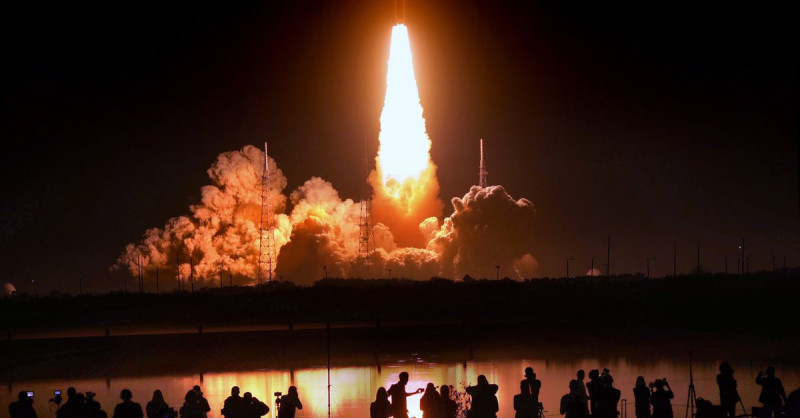
The Artemis II launch is near. Florida's Kennedy Space Center is abuzz with anticipation. The Space Launch System (SLS) rocket, a towering behemoth of engineering, sits on the launch pad. The countdown clocks are ticking down to the mission that will send four astronauts on a historic journey around the moon. The first crewed mission to the moon in over 50 years is just days away.
The Artemis II Mission: A Giant Leap for Humanity
The Artemis II mission is more than just another space launch. It represents a bold step forward in humanity's quest to explore the cosmos. The mission builds on the success of the uncrewed Artemis I, which demonstrated the capabilities of the SLS rocket and the Orion spacecraft in deep space. Artemis II will see the first human crew travel beyond low-Earth orbit since the Apollo program. The mission will validate the life support systems, navigation, and communication capabilities necessary for future lunar missions.
NASA has meticulously prepared for this mission, with the launch vehicle and spacecraft undergoing rigorous testing and checks. The rollout to the launch pad on March 19 marked a significant milestone, signaling that all systems are ready for the historic launch.
"This is a monumental moment for NASA and for humanity," said a NASA spokesperson. "Artemis II is not just about getting back to the moon; it's about paving the way for future exploration and discovery. This mission will inspire generations to come."
The mission's timeline is precise, with a six-day launch window opening on April 1. This window was carefully chosen to optimize the alignment of Earth and the moon, ensuring a smooth and efficient journey. The astronauts will spend approximately 10 days in space, traveling around the moon and returning to Earth, a journey that will test the limits of human endurance and technological capability.
Preparing for the Future: The Artemis Program
The Artemis program is NASA's ambitious plan to return humans to the moon and eventually establish a sustainable presence there. Artemis II is the second phase of this program, following the successful uncrewed Artemis I mission in 2022. The program aims to use the moon as a stepping stone for future missions to Mars, leveraging the knowledge and technology gained from lunar exploration to prepare for the even greater challenges of deep space travel.
This mission is pivotal for the Artemis program, as it will provide critical data on the performance of the Orion spacecraft and the SLS rocket in deep space. The insights gained from Artemis II will inform the design and development of future missions, ensuring that they are safer, more efficient, and more capable of achieving their objectives.
The crew for Artemis II includes four astronauts, each selected for their expertise and experience. They will undertake a series of tasks during the mission, including conducting scientific experiments, testing life support systems, and conducting communication tests. Their journey will be closely monitored by mission control, with real-time updates and data transmission ensuring that any issues can be addressed promptly.
The Launch Pad: A Symbol of Human Aspiration
The launch pad at Kennedy Space Center is more than just a physical structure; it is a symbol of human aspiration and the relentless pursuit of knowledge. Standing beneath the towering SLS rocket, one can't help but feel a sense of awe and wonder. The countdown to launch will be a moment of collective anticipation, as the world watches and waits for the historic liftoff.
As the launch date approaches, the energy at the Kennedy Space Center is palpable. Teams of engineers, scientists, and technicians work tirelessly to ensure that every system is ready for the mission. The atmosphere is a mix of excitement and tension, as the responsibility of launching the next chapter in human space exploration weighs heavily on their shoulders.
The launch of Artemis II will be a pivotal moment in human history. It represents a return to the moon, a testament to human ingenuity, and a stepping stone to future exploration beyond our planet. As the countdown continues, the world watches with bated breath, waiting for the moment when the SLS rocket will soar into the sky, carrying the hopes and dreams of humanity with it.