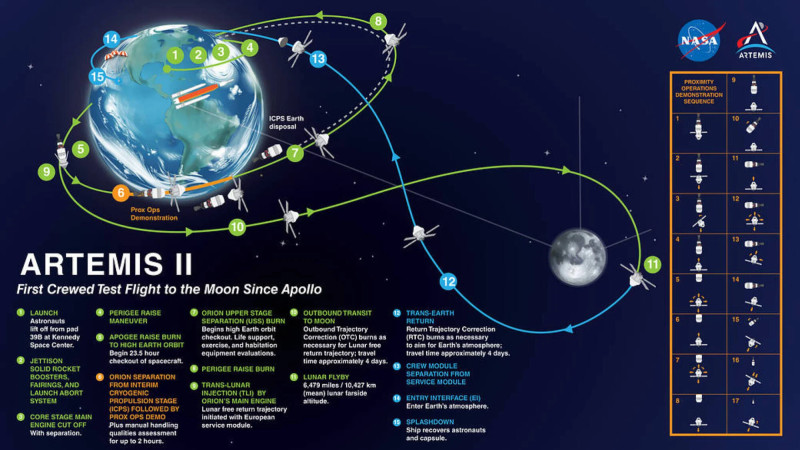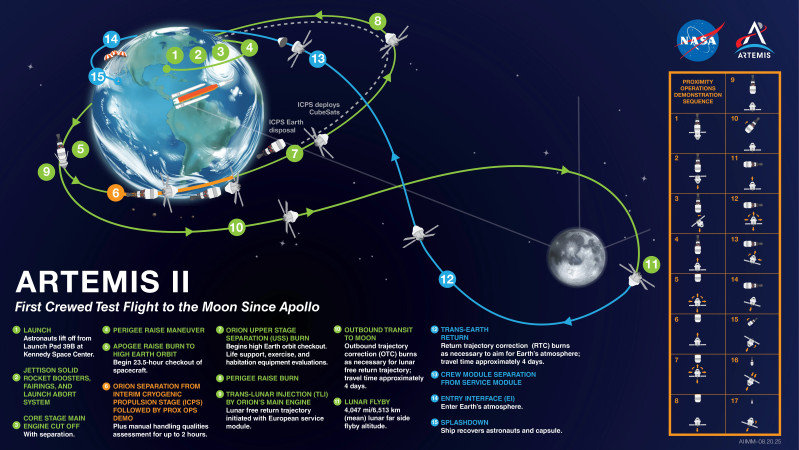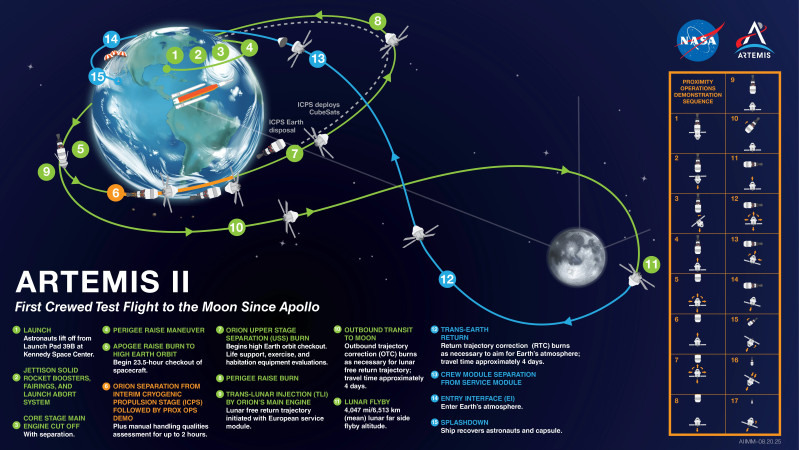
You've missed the launch this morning, but NASA's Artemis II is already blasting toward the moon. If you're wondering how long the journey will take, you’re not alone. The answer involves a delicate dance of propulsion technology, orbital mechanics, and celestial timing.
The Artemis II Timeline: A Mere Ten-Day Trip
Imagine this: Artemis II is expected to traverse the vast expanse of space and reach the moon in less than a week. The journey is estimated to take around four days to reach lunar distance, but the full mission, including the return trip, stretches to about ten days.
Think about it — just over a week to journey to the moon and back. It’s a testament to the staggering advancements in space travel. The moon is about 384,400 kilometers away from Earth, and modern spacecraft are pushing the limits of what’s possible.
Artemis II: The Mission So Far
So, where is Artemis II now? The capsule is expected to reach the moon around April 6, 2026, the sixth day of the mission. The mission is a crucial step in NASA's lunar exploration program.
Unlike the Apollo missions, which involved complex lunar orbits and surface landings, Artemis II is focusing on a different kind of journey. The crew will venture around the moon and back to Earth, but they won’t land on the lunar surface.
NASA's Artemis II is designed to test the Orion spacecraft's life-support systems and propulsion, ensuring it's ready for the first human lunar landing since 1972.
Time to the Moon: More Than Just Distance
Gone. So how long does it take to get to the moon? It's a question that has stumped even the most seasoned space enthusiasts.
The time it takes to reach the moon varies widely depending on several factors. Propulsion technology, the spacecraft's trajectory, and the moon's ever-changing distance from Earth all play a role. For example, the Apollo 11 mission took about three days to reach the moon, while other missions have taken as long as 4.5 months .
But what about the lunar distance? The average distance is about 384,400 kilometers, but the moon's elliptical orbit means this distance fluctuates. When the moon is closest to Earth, known as perigee, it's about 363,100 kilometers away. When it's farthest, known as apogee, it's around 406,700 kilometers away.
So, how long does it take to get to the moon? The answer is complicated. It depends on the trajectory, the propulsion technology used, and the moon's distance from Earth at the time of launch.
Think again. The journey to the moon is not a simple straight line. Spaceships follow a trajectory that takes them into orbit around Earth before they head toward the moon. This orbital insertion adds time to the journey, but it's essential for achieving the velocity needed to escape Earth's gravitational pull .
Imagine this: A spaceship launches from Earth and enters orbit. It then performs a series of maneuvers to increase its velocity, slowly escaping Earth's gravitational pull. Once it reaches the moon, it performs another series of maneuvers to enter lunar orbit. The entire process takes time, and the time it takes varies depending on the mission's objectives and the spacecraft's capabilities.
Nobody saw this coming. The Orion spacecraft, which will be used for the Artemis missions, is designed to carry astronauts to the moon and back. It's equipped with advanced life-support systems, propulsion, and navigation technology. The spacecraft will be tested during the Artemis II mission, which will pave the way for future human lunar landings.
When will Artemis II reach the moon? The capsule is expected to reach the moon on April 6, 2026, the sixth day of the mission. The mission is a crucial step in NASA's lunar exploration program, and it will test the Orion spacecraft's life-support systems and propulsion, ensuring it's ready for the first human lunar landing since 1972.
But what about the Artemis II mission? The mission is expected to last about ten days, with the crew reaching the moon's vicinity on around day five or six before returning to Earth. The mission will test the Orion spacecraft's life-support systems and propulsion, ensuring it's ready for the first human lunar landing since 1972.
"The Artemis II mission is a crucial step in NASA's lunar exploration program. It will test the Orion spacecraft's life-support systems and propulsion, ensuring it's ready for the first human lunar landing since 1972," said NASA Administrator Bill Nelson.