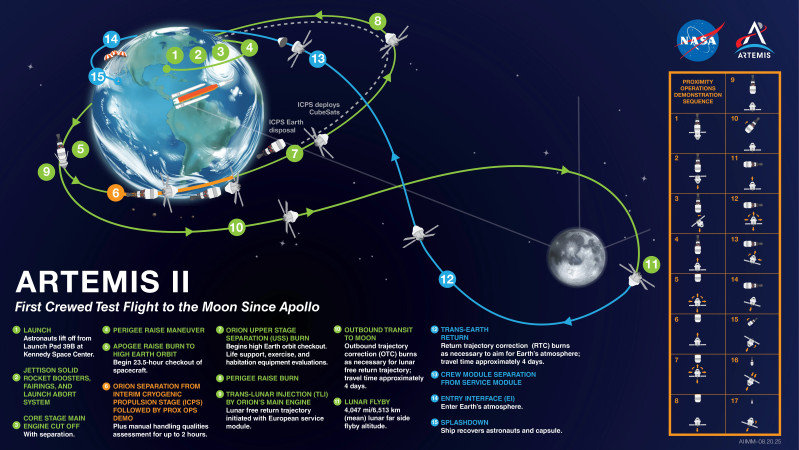
The Artemis II mission is the second of NASA's ambitious Artemis campaign, a pivotal step toward returning humans to the Moon and eventually setting foot on Mars. As of 2026-04-02, the mission is well underway, with the Orion spacecraft and its crew of four astronauts en route to the Moon. The mission, which launched from Kennedy Space Center on April 1, 2026, has captured global attention, marking a significant milestone in space exploration.
Live Tracking Artemis II: Real-Time Updates
NASA's Artemis II mission can be tracked in real time, offering an unprecedented level of transparency and engagement for space enthusiasts around the world. The Artemis II Mission Tracker provides detailed information, including the spacecraft's position, speed, and distance from Earth and the Moon. This real-time data is crucial for understanding the mission's progress and the challenges the crew faces during their journey.
For those interested in following the mission closely, NASA's Artemis Realtime Orbit Website (AROW) offers a comprehensive 3D timeline of the Orion spacecraft's journey. This tool allows users to see the spacecraft's trajectory, mission elapsed time, and other critical data in real time.
In addition to NASA's official tracker, other platforms like ArtemisLive and the James Webb Tracker offer real-time updates. ArtemisLive, for example, provides detailed information on the planned free-return trajectory, spacecraft telemetry, and live mission status. This platform also includes accurate positions of all planets in our solar system, adding a layer of context to the mission's journey.
The Crew and Their Mission: A Detailed Look
The Artemis II crew consists of four highly trained astronauts: Reid Wiseman (Commander), Victor Glover (Pilot), Christina Koch (Mission Specialist 1), and Jeremy Hansen (Mission Specialist 2). Their mission is to test the Orion spacecraft's systems and ensure the crew's safety during this critical phase of the Artemis campaign.
The Orion spacecraft, crucial for NASA's lunar and Mars missions, is equipped with advanced technologies designed to support human spaceflight beyond Earth's orbit. The Artemis II mission is expected to take about 10 days, with the crew conducting critical tests and documenting their experience in real time.
"This mission is a testament to humanity's relentless pursuit of exploration and our ability to push the boundaries of what is possible. Artemis II not only sets the stage for future lunar missions but also paves the way for the first crewed mission to Mars," said NASA Administrator Bill Nelson.
Artemis II: The Journey to the Moon
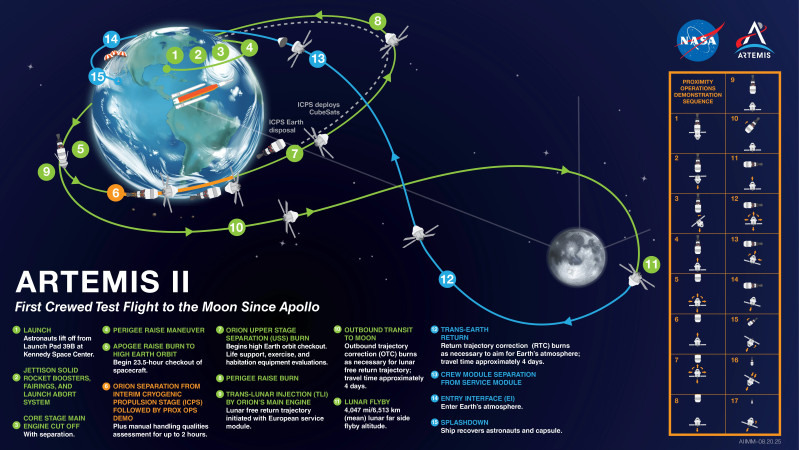
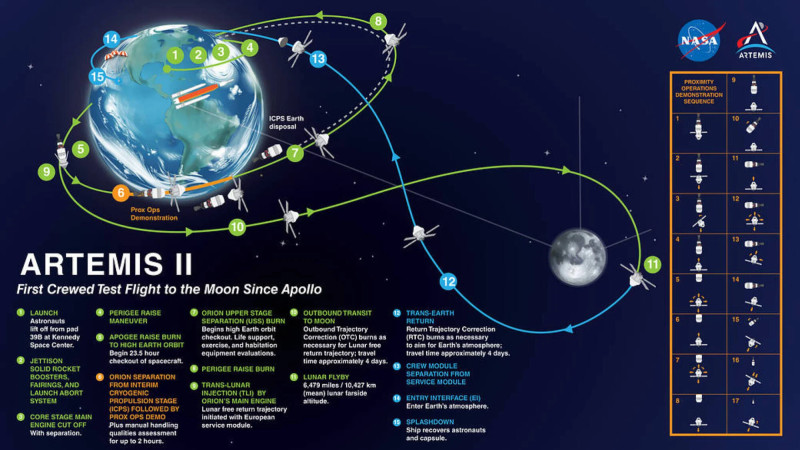
How long will it take Artemis II to reach the Moon? The journey to the Moon will take approximately 3 to 4 days, with an additional 3 to 4 days to return to Earth. The total duration of the Artemis II mission is approximately 10 days.
One of the most crucial aspects of the mission is the free-return trajectory of the Orion spacecraft. This trajectory allows the spacecraft to return to Earth safely without requiring any additional propulsion or complex maneuvers. The free-return trajectory is a critical safety feature, ensuring that the crew can always return home, even in the event of an emergency.
Think again. Is this the beginning of a new era of space exploration? Perhaps, but one thing is clear: the Artemis II mission is just the start. As the spacecraft continues its journey, the world watches with bated breath, waiting to see what discoveries and challenges lie ahead. Where will Artemis II be in the next few days? The journey continues, and the world watches.