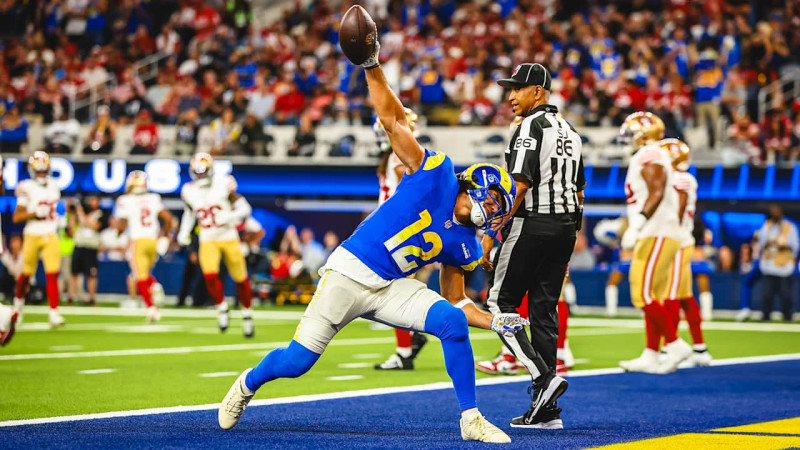
In a tumultuous turn of events, Los Angeles Rams wide receiver Puka Nacua has found himself at the center of a storm for his antisemitic touchdown celebration. This controversy has not only divided fans but also sparked a heated debate about racism in sports. The incident began when Nacua performed a gesture during a livestream that was deemed antisemitic, leading to a torrent of criticism from both the public and political figures. The incident has added layers of complexity to the ongoing discussion around racial sensitivity and the responsibilities of public figures.
Nacua has since issued an apology, stating that he had no prior knowledge that the gesture was antisemitic. "I had no idea this act was antisemitic in nature and perpetuated harmful stereotypes against Jewish people," he said, emphasizing that his actions were unintentional. Despite his apology, the fallout has been significant. Critics argue that ignorance is not an adequate defense, pointing to the broader implications of such gestures in a society already grappling with rising antisemitism.
Adding to the controversy, Sean McVay, the head coach of the Los Angeles Rams, has offered a fiery defense of his player. McVay's impassioned statements have highlighted the delicate balance teams must maintain between supporting their players and addressing public backlash. The Rams' handling of the situation has been closely scrutinized, with some praising their support for Nacua, while others believe the team should have taken a stronger stance against the offensive gesture. The incident has also brought into focus the role of social media in amplifying controversial actions, as Nacua's initial explanation and subsequent tweets have added fuel to the fire.
The situation has also raised questions about the broader cultural context. The incident occurred in the wake of the Bondi Beach massacre, an event that has heightened tensions and sensitivities around antisemitism. The Los Angeles Jewish community, already on edge, has been particularly vocal in its condemnation of Nacua's actions. This has sparked a broader conversation about the intersection of sports, social media, and societal issues, underscoring the need for greater cultural awareness and sensitivity among public figures.
The controversy surrounding Nacua's apology and subsequent actions has added another layer of complexity. After a heartbreaking overtime loss to the Seahawks, Nacua posted a tweet criticizing referees, which was later deleted. This action has been seen by some as an attempt to shift the narrative away from his antisemitic gesture, further complicating the team's handling of the situation. The Rams, known for their strong community engagement, now face the challenge of navigating this controversy while maintaining their team's public image and moral integrity.
As the Rams and Nacua navigate this tumultuous period, the incident serves as a stark reminder of the power of gestures and the importance of cultural sensitivity in public life. The fallout from Nacua's actions has sparked a necessary conversation about the responsibilities of athletes and the impact of their actions on wider society. Whether this controversy will lead to meaningful change or fade away remains to be seen, but one thing is clear: the spotlight on Puka Nacua and the Los Angeles Rams is only just beginning.