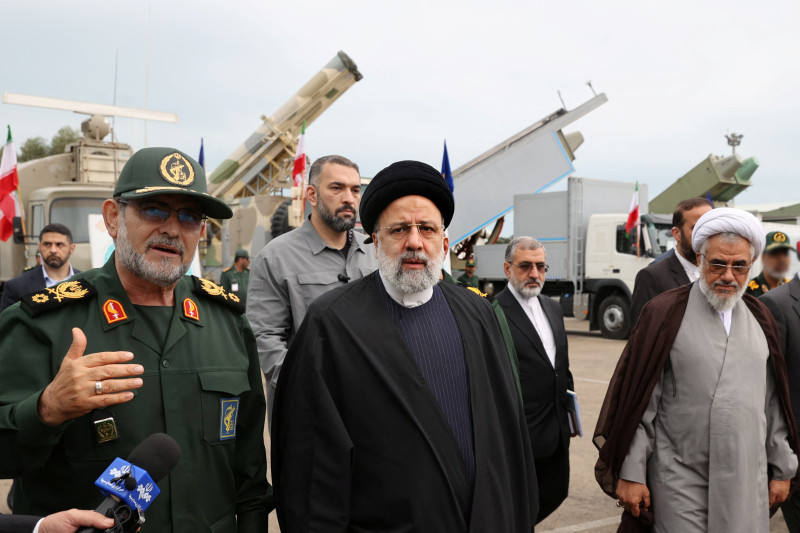
Iranian President Masoud Pezeshkian has stated that his country is in a state of "total war" with the United States, Israel, and Europe, marking a significant escalation in global tensions . The declaration comes amid rising nuclear tensions and recent military conflicts, including a 12-day air war in June that resulted in nearly 1,100 Iranian casualties, including senior military commanders and nuclear scientists .
Pezeshkian's remarks highlight the complexity of the current conflict, comparing it to Iran's devastating war with Iraq in the 1980s, during which hundreds of thousands of people lost their lives . The Iranian president asserted that the current situation is more dire, with Tehran better equipped to respond militarily to its adversaries .
This latest declaration follows a series of escalations, including US strikes on Iranian nuclear facilities and an unprecedented attack by Israel on Iranian military and nuclear sites, as well as civilian areas . The conflict has been further fueled by a planned meeting between former US President Donald Trump and Israeli Prime Minister Benjamin Netanyahu, where Iran is expected to be a key discussion point .
The situation has led to jubilant celebrations in Iran, with state television broadcasting scenes of crowds rejoicing over what they perceive as a "national victory" following a US-announced ceasefire between Iran and Israel . Despite these celebrations, the ceasefire does not appear to have diminished the intensity of the rhetoric or the underlying tensions.
The Iran news highlights a critical moment in global politics, with the potential for further escalation or de-escalation hanging in the balance. As the world watches, the diplomatic and military maneuvering between these key players will shape the future of the Middle East and beyond. The situation remains fluid, with ongoing developments likely to have far-reaching implications for regional stability and international relations.