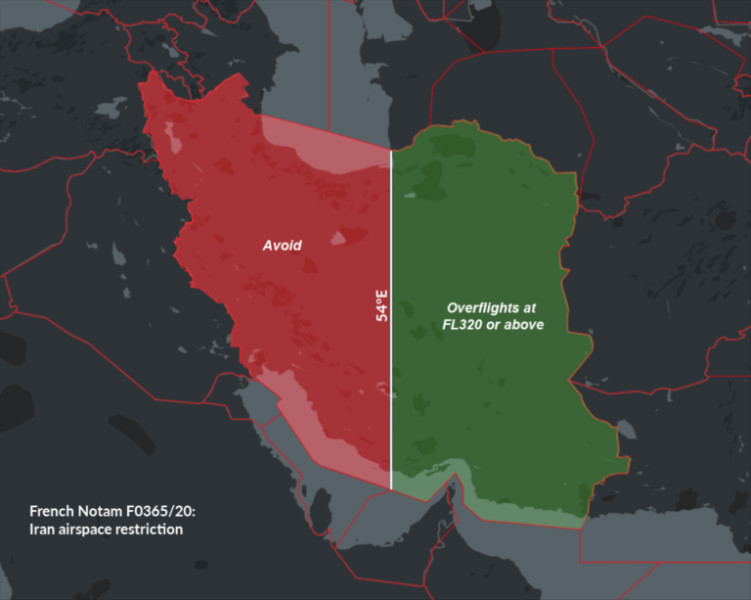
The Iranian airspace closure is a strategic move amidst rising geopolitical tensions. This action comes at a pivotal moment, as the United States moves its warships to the region and Iran's internal conflicts escalate. The Iranian authorities issued a NOTAM (Notice to Airmen), which is a temporary closure of the Tehran Flight Information Region (FIR). This closure affects all flights, allowing only international civil arrivals and departures with prior authorization from Iran's civil aviation authority. The closure began with a NOTAM issued by Iran, which went into effect on January 15, 2026. The closure was temporary, lasting only a few hours, but it highlighted the escalating tensions in the region. This move has significant implications for both regional and international aviation, as the Iranian airspace is a critical corridor for flights between Europe, the Middle East, and South Asia.
The NOTAM closure was quickly lifted, resuming flight operations within Iranian territory. Despite the brief closure, several international carriers, including Emirates, Qatar Airways, and Turkish Airlines, had suspended their flights to Iran over the weekend. However, Iranian airlines, including Iran Air, Mahan Air, and Qeshm Air, maintained uninterrupted service. Mahan Air, which is Iran's largest airline, was one of the few airlines initially allowed to operate during the closure. It flew two flights from Guangzhou and Shenzhen, China, to Tehran, Iran.
This closure is part of a broader pattern of military and security escalations in the region. The Iranian authorities have been issuing NOTAMs for various reasons, including military exercises and missile tests. In 2019, Iran shot down a US military unmanned aircraft operating in the Gulf of Oman with a surface-to-air missile (SAM) system. Since 2017, Iran has conducted multiple ballistic missile test launches without issuing any NOTAMs to warn civil operators, the latest taking place in late 2019.
The reopening of the airspace amidst regional tensions and the lifting of the NOTAM closure marks a significant event in the region. The situation is complex, with various stakeholders involved and a multitude of potential outcomes. The NOTAM closure and the Iranian authorities' actions in response to US military movements and internal protests reflect the broader geopolitical tensions in the Middle East. As the situation continues to evolve, it is crucial to monitor developments closely and be prepared for potential further disruptions to flight operations and regional security.