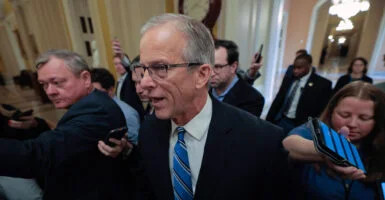
As the legislative landscape in Washington continues to evolve, **Senate Majority Leader John Thune** finds himself at the center of a contentious political debate over the **SAVE America Act**. This controversial bill, which aims to implement stringent voter identification and eligibility requirements, has sparked a heated exchange between the Republican leadership and President Trump, who strongly advocates for its passage. However, Thune has made it clear that the path to enacting the SAVE America Act is fraught with challenges, notably due to the Senate's 60-vote threshold for most legislation.
The SAVE America Act, also known as the Safeguard American Voter Eligibility (SAVE) Act, has been a top priority for President Trump. The bill seeks to mandate voter ID and proof of citizenship, measures that Trump and his supporters argue are crucial for maintaining the integrity of U.S. elections. However, Senate Democrats have vowed to block the bill, asserting that these requirements would disproportionately affect minority and low-income voters, who are less likely to possess the necessary identification documents.
Thune's position on the SAVE America Act has been met with both praise and criticism. On one hand, he has been steadfast in his support for the principles underlying the bill, emphasizing the importance of securing the electoral process. On the other hand, he has been forthright in acknowledging the practical hurdles that stand in the way of its passage. The Senate Majority Leader has stated that there are not enough votes to change the filibuster rule, a move that would allow the bill to pass with a simple majority rather than the required 60 votes.
Despite the political pressures, Thune has remained resolute in his stance, attributing much of the conservative backlash to a "paid influencer ecosystem" that amplifies calls for the bill's passage. This pragmatic approach has earned him respect from some quarters for his willingness to engage with the nuances of Senate politics, even as it has drawn the ire of more militant elements within the Republican Party. Thune's strategy appears to be one of cautious engagement, balancing the desire to advance legislative priorities with the need to maintain a functional Senate environment.
Thune is facing pressure from President Trump, who has demanded a vote on the SAVE America Act and has vowed not to sign any other bills until it is passed. This stance has created a rift within the Republican Party, with some members pushing for a filibuster change to expedite the bill's passage, while others, including Thune, remain skeptical of the feasibility of such a move. The Senate Majority Leader has also addressed concerns about the political fallout, suggesting that changing the filibuster rules could have unintended consequences that might ultimately weaken the Senate's ability to function effectively.
In the broader context, the standoff over the SAVE America Act reflects deeper divisions within the Republican Party. The bill has become a litmus test for conservative credentials, with critics arguing that it amounts to voter suppression. Meanwhile, proponents insist that it is a necessary step to ensure election integrity. As the legislative battle continues, all eyes are on Thune, who must navigate these treacherous political waters while striving to maintain his party's unity and advance its agenda. Whether he succeeds or not, the outcome of this fight will have significant implications for the future of American politics and the Senate's role within it.