NASA Satellite Re-enters Earth’s Atmosphere: A Detailed Analysis of the Van Allen Probe A

The re-entry of NASA’s Van Allen Probe A into Earth’s atmosphere has captured global attention, marking the end of a 14-year mission that has significantly contributed to our understanding of the space environment. Launched in 2012, the 1,300-pound satellite was designed to study the Van Allen radiation belts, which are regions of space where the Earth’s magnetic field traps charged particles from the sun and cosmic rays.
The U.S. Space Force has closely monitored the satellite’s descent, providing updated projections on its trajectory. As of March 10, 2026, the probe’s re-entry was imminent, with most of its components expected to incinerate during atmospheric entry. Despite this, some fragments are anticipated to survive, posing a minimal risk to humans on the ground.
NASA has assured the public that the risk of any debris causing harm is exceedingly low, with a 1 in 4,200 chance of any part of the satellite hitting anyone. The agency’s confidence stems from the satellite’s design and the rigorous analysis of its re-entry path. Much of the probe will disintegrate due to the intense heat and pressure of atmospheric re-entry, similar to the natural process experienced by meteorites entering the Earth’s atmosphere.
While the Van Allen Probe A has completed its mission, its legacy in space exploration will endure. The data collected by the probe has been pivotal in understanding how the Earth’s magnetic field and solar activity affect satellites and space missions. This information is crucial for the development of future space technologies and for ensuring the safety of astronauts and spacecraft.
NASA’s handling of the re-entry process highlights the agency’s commitment to safety and transparency. By providing regular updates and detailed projections, NASA has managed to keep the public informed and alleviate concerns about potential risks. The successful management of the probe’s re-entry serves as a testament to NASA’s expertise in space mission management and its ability to navigate the complexities of space debris mitigation.
The re-entry of the Van Allen Probe A also underscores the broader issue of space debris and the increasing need for effective strategies to manage it. As more satellites and spacecraft are launched into orbit, the risk of collisions and uncontrolled re-entries increases. This event serves as a reminder of the importance of responsible space exploration and the development of technologies to mitigate the risks associated with space debris.
How does this story make you feel?
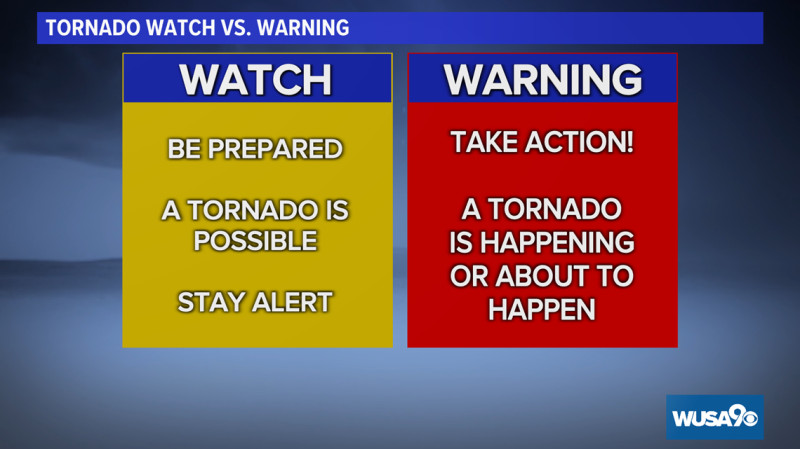 Up next · ScienceUnderstanding Tornado Warnings vs. Tornado Watches