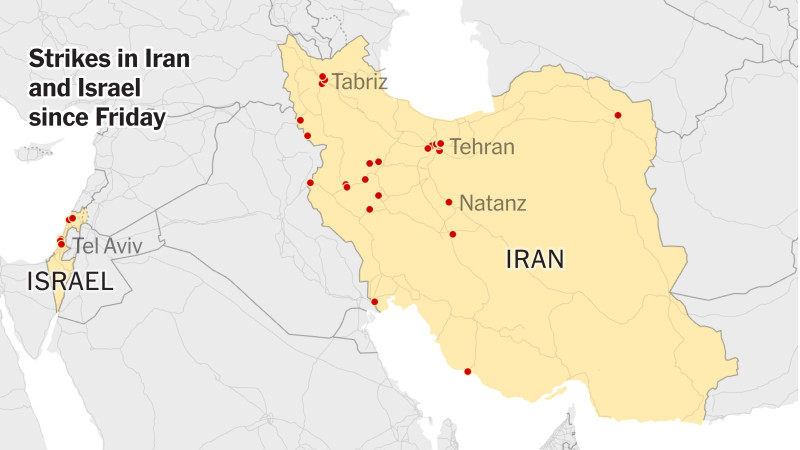
The Iran-Israel conflict, which began with a strike on February 28, 2026, has rapidly escalated into a broader regional conflict. The US and Israel have targeted Iranian military infrastructure, leadership, and residential areas, while Iran has retaliated with missiles and drones, marking a significant escalation in the Iran-Israel war.
Conflict Origins: Ideological and Geopolitical Tensions
The roots of the Iran-Israel conflict go deep, tracing back to the 1979 Islamic Revolution in Iran. This revolution shifted Iran's stance on Israel, leading to a long-standing ideological hostility. Over the decades, Iran has supported militant groups like Hamas, which has further strained relations with Israel and its ally, the US.
Israel, in response, has carried out numerous strikes, including the recent attack on the Iranian consulate in Damascus, Syria. These actions have provoked retaliation from Iranian forces, who have targeted both Israeli and American interests in the region. The latest chapter of the conflict began on February 28, with Israel and the US launching coordinated strikes on Iranian military sites and leadership in Tehran.
Iran, in turn, has warned of more extensive retaliation, including potential attacks on civilian and strategic targets in the United Arab Emirates and other regional allies of the US and Israel. This escalation has led to significant casualties and infrastructure damage, with over 5,000 targets hit inside Iran by the US and Israel, and the loss of over 140 Americans in the conflict.
The Current Battlefield: Broadening Conflict and Global Impact
As the Iran-Israel conflict enters its 16th day, it has become a multi-front war, with Iran launching retaliatory attacks on Israel and US assets in the Middle East. The conflict has disrupted global travel and oil markets, with significant implications for international security and economic stability.
The Iran-Israel conflict has also impacted Lebanon, where Israeli strikes against Hezbollah, an Iranian-backed militant group, have displaced over 500,000 people and resulted in more than 300 deaths. This has exacerbated the humanitarian crisis in the region, leading to growing international concern and calls for a ceasefire.
Prime Minister Benjamin Netanyahu has vowed continued aggression, hinting at "many surprises" in the conflict's next phase, which could further destabilize the region and draw in more international actors. Iran, meanwhile, is focusing on high-value targets, aiming to strike at the heart of Israeli and US interests, both within the region and globally.
Looking Ahead: Potential Escalations and Diplomatic Efforts
The current trajectory of the Iran-Israel war indicates that the conflict could last much longer if no diplomatic breakthroughs occur. The global implications of the conflict are significant, with potential disruptions to global travel, oil markets, and broader international security.
The US and Israel have initiated a series of crippling air strikes on Iranian targets, with Iran vowing to continue its retaliation. This cycle of escalation has the potential to draw in further international actors, including regional powers and global superpowers, making the conflict even more complex and dangerous.
The situation on the ground is fluid, with both sides continuing to target each other's military and civilian infrastructure. The next significant event to watch will be the potential for a diplomatic intervention or an escalation that could alter the course of the conflict. The continuing conflict of Iran-Israel war is on high alert as global powers watch closely to see the next move from all parties involved.