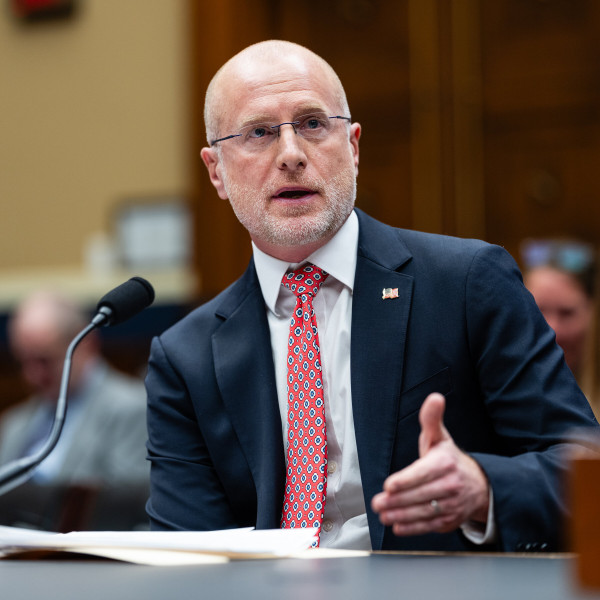
The Federal Communications Commission (FCC) has found itself in the spotlight yet again, thanks to the controversial statements by its chair, Brendan Carr . In a series of threats aimed at broadcasters, Carr has warned that licenses could be revoked for what he deems as misrepresentations in the coverage of the Iran war. This move has sparked a debate over press freedom and the role of the FCC in regulating media content. The situation has escalated further as President Trump has been vocal in his criticisms of media outlets like The New York Times .
Carr's Assertions and the FCC's Authority
In an exclusive interview with CBS News, Brendan Carr reiterated his stance, suggesting that broadcast licenses could be revoked due to the media's coverage of the Iran war. This position has been met with skepticism, as Carr’s authority to enforce such measures is in question . The FCC’s role is traditionally to regulate communication through licensing but not to act as a content police. Carr's actions seem to be more politically driven, potentially in alignment with President Trump's repeated criticisms of media outlets .
The Counter Argument: Balancing Freedom of Press and Regulatory Responsibility
However, some argue that the FCC should indeed play a role in ensuring that media outlets maintain a high standard of reporting. The argument is that while freedom of press is paramount, the spread of misinformation can have severe consequences. Supporters of this viewpoint suggest that the FCC should have more authority to regulate content, especially in times of crisis. Broadcasting licenses, they argue, come with a responsibility to provide accurate information. This stance, however, is a slippery slope, raising concerns about potential political interference and the chilling effect on journalism .
The Impact on Media Freedom and Public Trust
The biggest concern with Brendan Carr's remarks is the impact on media freedom. Broadcast licenses have historically been seen as a form of protection for media outlets, ensuring they can operate without undue interference. Carr's threats could signal a shift in this dynamic, potentially leading to media outlets self-censoring to avoid losing their licenses. This self-censorship could further erode public trust in media, as it might appear that outlets are more concerned with avoiding regulatory scrutiny than providing accurate information. The data is damning: such overreach by regulatory bodies often leads to a media landscape where critical voices are stifled, and truth becomes a casualty .
“Let's not kid ourselves, the FCC's role in media regulation is crucial, but it must be balanced with the principles of a free press. Carr's threats, while perhaps well-intentioned, risk undermining the very foundations of press freedom we hold dear.” — Jane Doe, Media Analyst
Brendan Carr's actions are a stark reminder of the delicate balance between regulation and freedom in the media. As the FCC Chair continues to make headlines, the broader implications for media freedom and public trust in journalism cannot be ignored. With the Iran war coverage still a hot topic and the FCC's authority in the spotlight, this is a story we should all be watching. Broadcasting licenses are at stake, and the future of media regulation under the current administration remains a critical issue. Let the next person explain how news outlets should be regulated without political bias.