Nvidia's Bold Vision: Unveiling the Future at GTC 2026
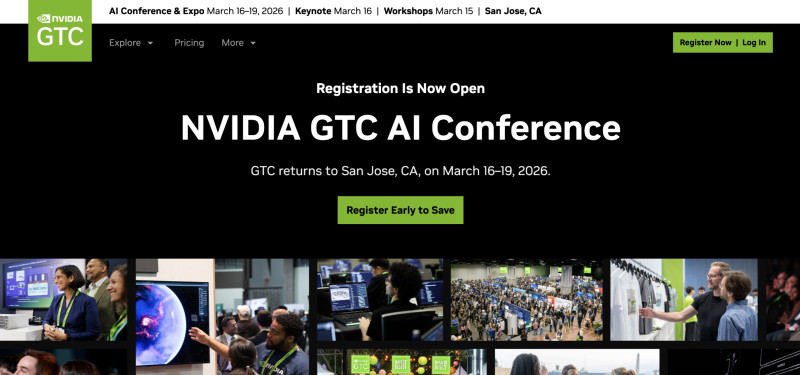
In the fluorescent glare of the briefing room, Jensen Huang, CEO of Nvidia, stood before a sea of reporters and investors, ready to unveil the company's latest ambitions. It's a moment that encapsulates the tech giant's relentless drive to shape the future of artificial intelligence and computing — a future that Nvidia believes will generate over $1 trillion in AI revenue by 2027.
Revolutionizing AI: Nvidia's New Offerings
At the helm of this visionary push is the newly announced Blackwell Vera Rubin CPU, a groundbreaking innovation designed to accelerate advanced computing tasks. This CPU, named after the renowned astronomer Vera Rubin, is set to revolutionize industries by providing unprecedented processing power. Jensen Huang's keynote at GTC 2026 was a whirlwind of announcements, but the Blackwell Vera Rubin stands out as a centerpiece of Nvidia's strategy to dominate the AI landscape.
But the Blackwell Vera Rubin is just the beginning. Nvidia also introduced the Groq LPUs, which are tailored for specialized AI tasks. These LPUs are expected to bring significant advancements in fields like autonomous vehicles, where precision and speed are critical. Huang's keynote also highlighted the launch of the NemoClaw software platform, which promises to simplify the integration of AI into various applications. This platform is designed to make AI more accessible, ensuring that even non-specialists can harness its power.
The combination of these new technologies positions Nvidia as a leader not just in hardware, but in the entire AI stack — from chips and infrastructure to models and autonomous vehicles. This comprehensive approach is a key selling point for investors, offering them a clear roadmap and visibility into Nvidia's growth trajectory.
Investor Confidence and Market Dominance
The stakes at GTC 2026 were high, and Huang's keynote delivered on its promise. Investors are keenly watching Nvidia's roadmap, and the announcements made during the GTC 2026 keynote are expected to significantly influence the company's market position. Huang laid out a clear three-generation GPU roadmap, providing investors with the visibility needed to assess Nvidia's growth trajectory through 2028.
One of the most striking revelations during the keynote was the disclosure of over $1 trillion in AI revenue visibility. This figure underscores Nvidia's confidence in its product roadmap and its ability to capture a significant portion of the AI market. The company's aggressive stance on AI is not just about revenue; it's about defining the future of technology.
Huang’s keynote also addressed the broader implications for the tech industry. The new products and platforms announced at GTC 2026 are poised to drive innovation across multiple sectors, from healthcare to finance, and from autonomous driving to smart cities. The impact of these technologies will be felt far and wide, reshaping industries and creating new opportunities for growth.
A profound sense of anticipation filled the room. The hum of phones buzzing in pockets — journalists hurrying to send updates — underscored the significance of the moment. The stakes are high, but so is the reward for those who can harness the power of AI.
Looking Ahead: The Future of Computing
The keynote at GTC 2026 was a masterclass in strategic communication. Huang’s ability to present a clear, compelling vision for the future of AI, combined with concrete product announcements, left the audience with a sense of excitement and urgency. The keynote address was — of course — not without its share of surprises. The sheer scope of Nvidia's ambitions, from new chips to advanced software platforms, reflects a company that is not just keeping pace with the future — it is trying to define it.
"The future of technology is not about building faster processors alone; it's about creating ecosystems that can seamlessly integrate AI into every aspect of our lives." — Jensen Huang, CEO of Nvidia.
As the lights dimmed and the keynote came to a close, the audience was left with a vivid image of a future where AI is the driving force behind innovation. But this vision is just the beginning. Just as the steam engine revolutionized the industrial age, AI is poised to transform the digital age in ways we can only begin to imagine.
How does this story make you feel?
 Up next · TechDLSS 5 to Revolutionize Gaming with Unprecedented Visual Fidelity