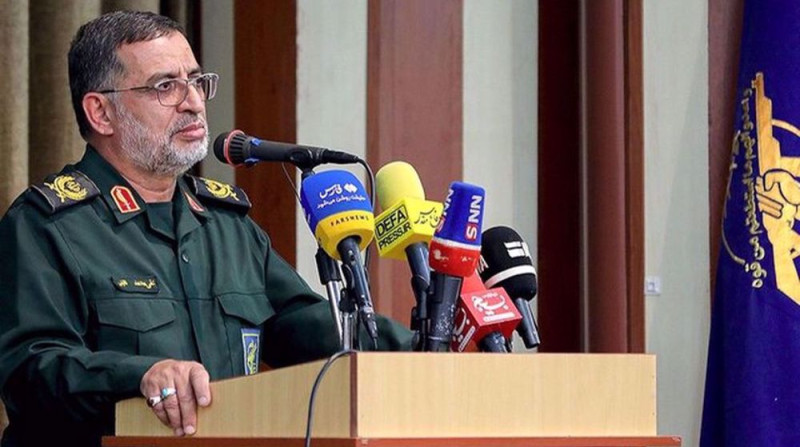
In the fluorescent glare of the IRGC briefing room, the hum of phones buzzing in pockets and the muffled whispers of credentialed journalists underscored a chilling announcement. Brigadier General Ali Mohammad Naeini, the face and voice of Iran’s Islamic Revolutionary Guard Corps (IRGC), had been killed in a joint US-Israeli strike. The solemn declaration, made on March 20, 2026, marked the end of a critical chapter in the ongoing geopolitical drama in the Middle East. The strike, which occurred at dawn, was labeled as a "criminal and cowardly terrorist act" by the IRGC, as reported by Sepah News.
A Career of Strategic Influence and Psychological Warfare
Ali Mohammad Naeini, born in 1957, was a brigadier general and professor of social sciences, a role that blended his military prowess with academic rigour. He was appointed as the IRGC spokesperson and deputy for public relations and publications in July 2024 by Hossein Salami, the commander of the IRGC, a position that placed him at the forefront of Iran’s media and strategic communications. His expertise in psychological, soft, and cognitive warfare, honed over four decades, made him a formidable figure in shaping Iran’s narrative and military strategy.
Prior to his role as spokesperson, Naeini held various senior positions within the IRGC, including the cultural deputy, a role that underscored his influence on the ideological and cultural dimensions of the organization. His academic background and military experience made him a key strategist in the IRGC’s public relations efforts, and he was a faculty member at Imam Hossein University, where he imparted his knowledge to future leaders.
The Defiant Voice of the IRGC
Naeini’s final statement, delivered with defiance and resolve, encapsulated his unwavering commitment to Iran’s military capabilities and readiness for confrontation. His words echoed the IRGC's stance on Iran's preparedness for a prolonged conflict, a message that resonated deeply within the corridors of power in Tehran. He asserted that any further provocations from Israel would elicit an unpredictable and severe response from Iran, highlighting the country's resolve and strategic depth.
In the week leading up to his death, Naeini had warned of "painful blows" awaiting those who dared to challenge Iran, a sentiment that resonated with the IRGC’s stance on long-term conflict. His words were not just empty threats but a testament to Iran’s strategic preparedness and willingness to engage in a protracted war.
The impact of Naeini’s death is multifaceted, affecting not only the IRGC but also the broader geopolitical landscape. His voice, which had been a constant in Iran’s media and strategic communications, will be missed, leaving a void that will be challenging to fill. The United Kingdom, among other nations, had sanctioned Naeini following the October 2024 Iranian actions, reflecting his significant role in the IRGC’s operations and influence.
A Legacy of Martyrdom and Resistance
Naeini’s martyrdom has galvanized support within Iran, painting him as a symbol of resistance and defiance. His legacy, intertwined with the IRGC’s narrative of resilience and readiness, will continue to inspire future generations of Iranian military and strategic leaders. The circumstances surrounding his death, marked by the IRGC’s defiant rhetoric and the international community’s swift condemnation, underscore the complexities of the ongoing conflict and the strategic importance of key figures like Naeini.
In the aftermath of Naeini’s death, the IRGC has vowed to continue its operations with renewed vigour, a testament to their commitment to their cause. As the geopolitical tensions in the Middle East simmer, the death of Ali Mohammad Naeini serves as a stark reminder of the high stakes and the personal costs of conflict. The world watches, hoping for a resolution, but the immediate future remains fraught with uncertainty and danger. As Iran mourns one of its key strategists, the international community braces for what could be a turning point in the ongoing conflict.