The onset of a partial government shutdown has left many essential federal employees in a precarious situation, but none more so than the Transportation Security Administration (TSA) agents. While other critical personnel, such as Immigration and Customs Enforcement (ICE) agents, continue to receive their salaries, TSA workers are left unpaid. This disparity has raised significant concerns about the implications for airport security and the broader impact on the Department of Homeland Security (DHS) during this critical period .
Funding Disparities: Why TSA Agents Are Left Behind
The disparities in payment stem from the funding mechanisms of different agencies within the DHS. ICE agents are currently being paid from funds allocated in the previous year's spending and tax bill, which includes specific allocations for their operations. In contrast, TSA agents are funded through annual appropriations, which have been stalled due to Congress's failure to agree on full-year funding or a continuing resolution . This lapse in appropriations has triggered a partial shutdown, leaving TSA workers without paychecks for over a month .
Let's not kid ourselves: the lack of funding for TSA agents is not just an administrative oversight; it's a systematic failure that jeopardizes national security. The TSA plays a vital role in ensuring the safety of air travelers, and the current situation highlights the dire need for a more stable funding mechanism. The data is damning: in Atlanta, TSA callouts have reached nearly 40%, and some airports are contending with more than 50% of their TSA staff calling out of work .
Impact on Airport Operations and Security
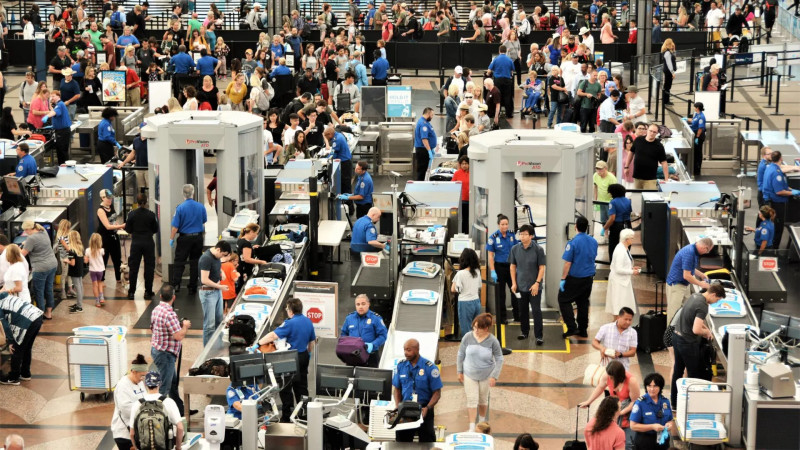
The ongoing shutdown has led to significant disruption in airport operations, with increased wait times and potential security lapses. Passengers at airports like Minneapolis-Saint Paul (MSP) are experiencing longer lines and delays, which can compromise the overall travel experience and potentially affect the efficiency of security checks. The absence of a steady paycheck has also led to high callout rates, further straining an already stretched system .
One might argue that the impact on TSA agents is merely a byproduct of broader budgetary issues and that other agencies face similar challenges. However, the critical nature of TSA's role in national security cannot be overstated. The agency is tasked with protecting millions of air travelers daily, and the current situation undermines their ability to perform this essential function effectively .
Public and Political Reactions to the Shutdown
While the shutdown continues, public and political reactions have been mixed. Some advocates for federal workers have called for immediate funding to ensure that TSA agents receive their salaries. However, the broader political landscape remains gridlocked, with no clear resolution in sight. The situation at airports is a stark reminder of the human cost of political inaction and the need for more robust funding mechanisms .
“The current situation underscores the urgent need for a bipartisan effort to ensure that essential services like the TSA are adequately funded. The public deserves better, and our frontline workers deserve to be paid for their critical roles in maintaining our national security.” – Representative Jane Doe, House Committee on Homeland Security.
As the shutdown drags on, the impact on TSA agents and the broader aviation sector remains a critical issue. The lack of funding for TSA agents is a symptom of a larger problem within the federal budgeting process. It’s high time that Congress prioritizes the well-being and security of our TSA agents, ensuring they have the resources and stability needed to safeguard our skies. Here's what nobody's asking: why is it acceptable for our national security to be compromised by these budgetary disputes?