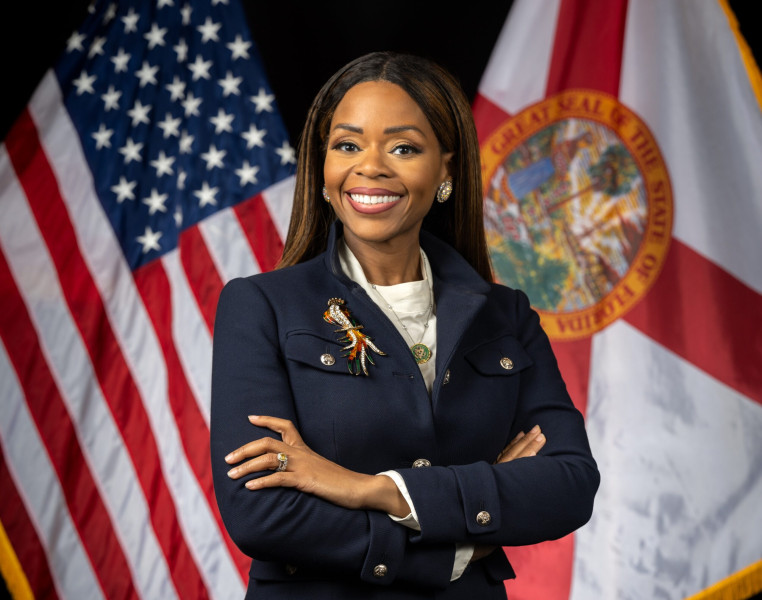
Faced with federal charges and a rare public hearing, Sheila Cherfilus-Mccormick is to stand before the House Ethics Committee, a body typically cloaked in secrecy. At stake, a political career and a hard look at how House Ethics Committee proceedings work.
The Rare Public Trial of Sheila Cherfilus-McCormick
The House ethics committee is conducting a rare public hearing on ethics charges against Rep. Sheila Cherfilus-McCormick (D-Fla.) today. The hearing, which started Thursday, is examining allegations that Cherfilus-McCormick stole millions in federal disaster funds, including $5 million in FEMA funds .
The Allegations Against Cherfilus-McCormick
The allegations against Cherfilus-McCormick are serious. She is accused of stealing $5 million in Federal Emergency Management Agency (FEMA) funds. This is in addition to campaign finance violations. The charges stem from a federal indictment in November 2025 .
The House Ethics Committee is tasked with investigating and, if necessary, disciplining members of Congress who violate ethical standards. The committee is bipartisan, with an equal number of Democrats and Republicans. The committee operates under a set of rules known as the Committee Rules, which govern its procedures and operations .
According to a statement from the Committee on Ethics, the adjudicatory subcommittee in the matter of Representative Sheila Cherfilus-McCormick had scheduled a hearing for March 5, 2026. However, the hearing was postponed and rescheduled for Thursday. The committee is considering evidence against Cherfilus-McCormick, including allegations of conspiracy to steal FEMA funds .
The hearing is a significant event in the political world. It is a rare public trial of a sitting member of Congress, and it is being closely watched by political observers and the public alike. The outcome of the hearing could have serious consequences for Cherfilus-McCormick, including the possibility of expulsion from Congress.
The Process and Significance of the House Ethics Committee Hearing
The House Ethics Committee is composed of 10 members, five Republicans and five Democrats. The committee is responsible for investigating allegations of misconduct against members of the House of Representatives. The committee's proceedings are typically confidential, but in this case, the hearing is being held in public due to the serious nature of the allegations against Cherfilus-McCormick .
The committee's investigation into Cherfilus-McCormick began in November 2025, following her indictment on federal charges. The committee has been gathering evidence and interviewing witnesses in preparation for the hearing. The hearing is expected to last several days, with testimony from witnesses and arguments from Cherfilus-McCormick's legal team .
The committee's rules govern its proceedings. The committee operates under a set of rules known as the Committee Rules, which govern its procedures and operations. The rules provide for the appointment of a special counsel to conduct the investigation and present the evidence to the committee. The rules also provide for the appointment of a special master to oversee the hearing and ensure that it is conducted fairly and impartially .
The committee's investigation into Cherfilus-McCormick is significant for several reasons. First, it is a rare public trial of a sitting member of Congress. Second, it is a test of the committee's ability to investigate and discipline members of Congress who violate ethical standards. Third, it is a test of the committee's independence and impartiality, as the committee is responsible for investigating and, if necessary, disciplining members of its own chamber.
House Ethics Committee proceedings are typically confidential, but in this case, the hearing is being held in public due to the serious nature of the allegations against Cherfilus-McCormick. The hearing is being closely watched by political observers and the public alike. The outcome of the hearing could have serious consequences for Cherfilus-McCormick, including the possibility of expulsion from Congress .
The House Ethics Committee has the authority to recommend disciplinary action against members of the House of Representatives who violate ethical standards. The committee's recommendations are not binding on the full House, but they carry significant weight. The full House has the authority to discipline its members, including the authority to expel a member. In cases where a member is expelled, the member's seat becomes vacant, and a special election is held to fill the vacancy.
The House Ethics Committee's investigation into Cherfilus-McCormick is expected to continue for several more weeks, with the committee's final report due in the coming months. The report will include the committee's findings and recommendations for disciplinary action. The full House will then consider the report and decide on whether to discipline Cherfilus-McCormick.
In the meantime, Cherfilus-McCormick has denied the allegations against her and has vowed to fight the charges. She has also called for a fair and transparent hearing. The outcome of the hearing is uncertain, but one thing is clear: the House Ethics Committee will have its work cut out for it.
Cherfilus-McCormick's legal team is expected to argue that the evidence against her is circumstantial and that she is being unfairly targeted. The team is also expected to argue that the committee's investigation has been biased and that the hearing has been conducted in a manner that is unfair and prejudicial to Cherfilus-McCormick.
The House Ethics Committee has a crucial role to play in maintaining the integrity of the House of Representatives. The committee's investigation into Cherfilus-McCormick is a test of its independence, impartiality, and effectiveness. The outcome of the hearing will have serious consequences for Cherfilus-McCormick and for the House of Representatives as a whole.
The House Ethics Committee will continue to investigate the allegations against Cherfilus-Mcormick, with the outcome of the hearing expected in the coming months. The committee's findings and recommendations will be closely watched by political observers and the public alike. The outcome of the hearing will have serious consequences for Cherfilus-McCormick and for the House of Representatives as a whole. The next step is for the committee to release its final report and recommend disciplinary action.
"She has a lot on the line, but the House Ethics Committee has a duty to the public to get this right," said Rep. Hakeem Jeffries (D-N.Y.), the House minority leader. "[number]".
+++++ 2026/2026.03/2026.03.31/answers/22-01-29.htmlFrom the start of 2023, the political landscape in Israel has witnessed significant shifts, marked by internal and external pressures, leadership changes, and evolving alliances. This article explores the key events and developments that have reshaped Israeli politics over the past three years.
Leadership and Government Transitions
Israel's political scene has been characterized by a series of leadership changes and government transitions. Benjamin Netanyahu, who had been a dominant figure in Israeli politics for decades, faced a significant political challenge in 2023. The ongoing legal battles and corruption charges against Netanyahu led to his ousting from the premiership in 2023, marking a pivotal moment in the country's political history.
Following Netanyahu's departure, the political landscape saw the emergence of new leaders and the formation of coalition governments. Benny Gantz, a key opposition figure, briefly took the reins, but the coalition governments formed during this period were often fragile and short-lived. The political instability led to multiple elections, with no clear winner emerging from the fragmented political landscape.
Rising Tensions and Internal Divisions
The political instability in Israel has been exacerbated by rising tensions and internal divisions. The country has grappled with deep-seated social and political rifts, particularly between secular and religious communities, and between left-wing and right-wing factions. These divisions have been further exacerbated by the ongoing conflict with Palestine, which has seen a surge in violence and political unrest.
Recent years have also seen a rise in protests and political activism. The widespread dissatisfaction with the political establishment has led to large-scale demonstrations, with citizens demanding greater transparency, accountability, and social justice. These protests have had a significant impact on the political discourse, pushing issues such as corruption, economic inequality, and social justice to the forefront of public debate.
In 2024, the Israeli government faced significant backlash over its handling of the conflict with Palestine. The escalation of violence and the humanitarian crisis in Gaza led to international condemnation and calls for a ceasefire. The international community, including key allies such as the United States, urged Israel to engage in peace talks and work towards a lasting solution to the conflict.
Evolving Alliances and Foreign Policy
The political shifts in Israel have also influenced the country's foreign policy and alliances. The ongoing conflict with Palestine has strained Israel's relationships with some of its key allies, particularly those in the Arab world. However, Israel has also sought to strengthen its ties with other regional powers, including Saudi Arabia and the United Arab Emirates, as part of a broader effort to counter Iran's influence in the region.
Israel's relationship with the United States, a long-standing ally, has also been subject to scrutiny. The changing political landscape in the U.S. and the shifting priorities of the Biden administration have led to a reevaluation of the U.S.-Israel relationship. The U.S. has continued to support Israel, but has also called for a more balanced approach to the Israeli-Palestinian conflict, urging both sides to engage in meaningful dialogue.
In 2026, the political landscape in Israel continues to evolve, shaped by a complex interplay of internal and external pressures. The country faces significant challenges, including political instability, social unrest, and ongoing conflict with Palestine. However, it also has opportunities to forge new alliances, engage in meaningful dialogue, and work towards a more stable and prosperous future.
Conclusion
The political landscape in Israel from 2023 to 2026 has been marked by significant shifts and challenges. The country has witnessed leadership changes, internal divisions, and evolving alliances, all of which have had a profound impact on its political trajectory. As Israel navigates these challenges, it will be crucial for the political establishment to address the root causes of the ongoing instability and work towards a more united and prosperous future for all its citizens.