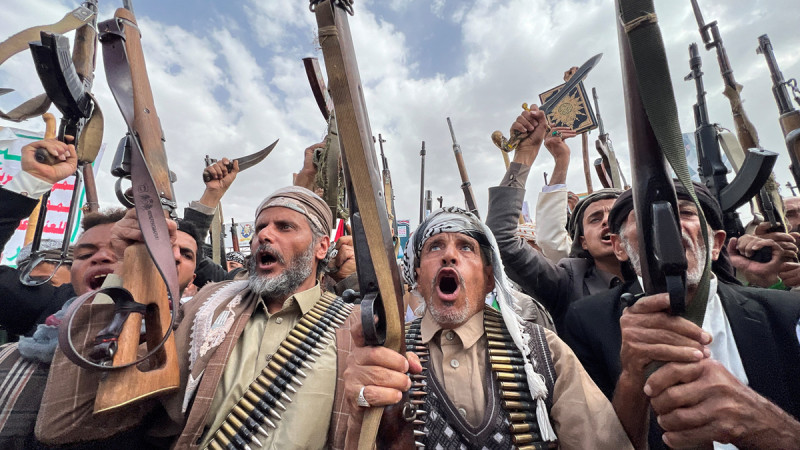
The Houthis have controlled Sanaa and the north-west of Yemen, including the Red Sea coastline, since 2014. The group, officially known as Ansar Allah, is a Shiite Islamist movement that emerged from Yemen in the 1990s. Their influence has transformed the region into a hotbed of geopolitical tension, drawing international condemnation and intervention.
Origins and Rise to Power
The Houthis emerged in the 1990s, but their international prominence surged in 2014. The group rebelled against Yemen's government, forcing it to step down and sparking a crippling humanitarian crisis. The Houthis have a history of fighting guerrilla wars with the Yemeni army, but expanded their power and built closer ties with Iran after the 2011 "Arab Spring" protests.
The Houthis have been a central player in Yemen's civil war, drawing widespread international condemnation for their actions. The group, which is predominantly made up of Zaydis, is led largely by the al-Houthi family. Most of Yemen's population lives in the areas controlled by the Houthis, and the group runs a de facto government.
The Houthis are driven by an explicitly antisemitic and anti-American ethos, which has fueled their military operations and political strategies. The group has been accused of receiving support from Iran, which has further complicated the geopolitical dynamics in the region.
Missile Strikes and International Repercussions
The Houthis have shown a willingness to extend their operations beyond Yemen's borders, turning the region into another front in an already tense conflict. In a significant escalation, the Houthis launched a missile strike against Israel in 2023. This action underscored the group's capability and intent to engage in broader regional conflicts, particularly in solidarity with other Iran-backed militias like Hamas.
The missile strike against Israel was a response to Israel's offensive against Gaza after the Hamas attack on October 7, 2023. The Houthis' actions have not only heightened tensions in the region but also drawn the attention of global powers, including the United States and Israel.
Impact on Global Politics
Iran's backing of the Houthis has been a contentious issue, with the U.S. and other nations accusing Iran of fueling instability in the region. The Houthis' anti-American and anti-Israeli sentiments have made them a formidable force in the Middle East, with their actions having far-reaching implications for international relations.
The Houthis' control over key areas of Yemen, including the Red Sea coastline, has significant strategic importance. The Red Sea is a major shipping route, and any disruption in this area can have global economic repercussions. The Houthis' actions have forced the international community to take notice, with various nations and organizations involved in efforts to mitigate the conflict.
The Houthis' influence in Yemen has also had a profound impact on the humanitarian situation in the country. The conflict has led to a severe crisis, with millions of people in need of aid. The international community has been grappling with the challenge of providing humanitarian assistance while navigating the complexities of the ongoing conflict.
The Houthis are a political and military organization that emerged from the north of Yemen in the early 2000s, named after their founder Hussein al-Houthi. They draw from the Zaydi branch of Shia Islam.
As the conflict in Yemen continues, the Houthis remain a pivotal force, shaping the political and military landscape of the region. With ongoing support from Iran and their anti-American and anti-Israeli stance, the Houthis are poised to remain a significant player in the Middle East's geopolitical dynamics. With Donald Trump’s campaign promises on Israel, the Houthis are holding out for a potential ally in the next American administration. The Houthis have also been accused of receiving support from Hezbollah, a Lebanese militia with close ties to Iran.
As the conflict in Yemen continues, the world watches for the Houthis' next move.