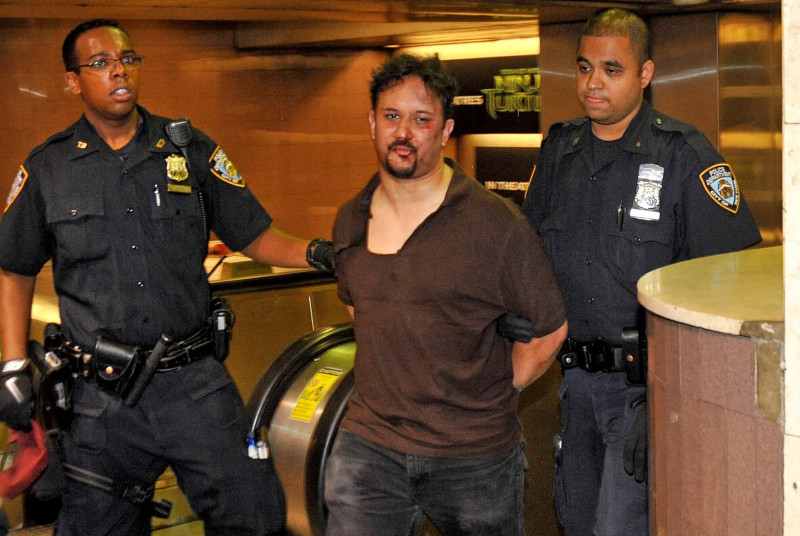
The bustling Grand Central Terminal in New York City was the site of a harrowing incident on Saturday when Anthony Griffin, armed with a machete, attacked three innocent individuals. This incident once again thrusts the problem of public safety into the spotlight, raising critical questions about security measures and the escalating violence in public spaces.
The Brutal Attack at Grand Central Terminal: What Happened?
The chaos unfolded around 11:00 a.m. on Saturday when Anthony Griffin, a 44-year-old man, boarded the 7 train at Vernon Boulevard in Queens and arrived at Grand Central Terminal, where he launched an unprovoked attack. Wielding a machete, he slashed three older adults, leaving them with severe injuries. The victims included an 84-year-old man, a 65-year-old man, and a 70-year-old woman. The New York Police Department (NYPD) responded swiftly, but it was too late to prevent the injuries. The suspect was later identified as Anthony Griffin, a man with a history of criminal activity, who was fatally shot by the police.
Anthony Griffin: A Disturbing History
Anthony Griffin was no stranger to law enforcement. While the details of his past criminal record are not yet fully disclosed, the fact that he was known to the authorities hints at a disturbing pattern of behavior. The chilling aspect of the attack is that Griffin reportedly screamed "I am Lucifer" during the assault. This added a layer of psychological terror to an already horrifying situation, raising questions about his mental state and the adequacy of the mental health support system in dealing with such individuals.
This is not the first time that a high-profile attack has occurred in a public transit hub. In the past, incidents of violence at Grand Central Terminal have underscored the need for heightened security measures. However, the frequency of such incidents suggests that current protocols may be insufficient in preventing or mitigating these attacks.
Let's not kid ourselves; the data is damning. The NYPD and city officials must grapple with the uncomfortable truth that despite increased surveillance and police presence, high-profile attacks continue to occur. The Grand Central Terminal is a symbol of New York's resilience, but it is also a target for those seeking to disrupt the city's harmony. Here’s what nobody’s asking: How do we ensure that such incidents do not become a regular occurrence in the heart of our city?
The Aftermath and Future of Public Safety
In the wake of the attack, the NYPD has been under scrutiny for its response and the handling of the situation. The swift action by the officers to neutralize the threat is commendable, but it also raises questions about the adequacy of preventive measures. The psychological and physical impact on the victims and witnesses is immeasurable, and the city must prioritize their well-being in the aftermath.
The incident at Grand Central Terminal is a grim reminder of the challenges facing public safety in urban areas. It underscores the need for a comprehensive approach that includes not only enhanced security measures but also robust mental health interventions and community engagement. The city must invest in strategies that prevent such incidents from occurring in the first place, rather than reacting after the fact. While the NYPD has been commended for its quick response, the underlying issues that led to this attack demand a more holistic approach.
The NYPD Commissioner Jessica Tisch labeled the incident as a "random attack," emphasizing the unpredictability and danger of such events. She urged the community to remain vigilant and report any suspicious activities to the authorities
“This incident underscores the unpredictable nature of such attacks and the need for heightened vigilance from both law enforcement and the public,” Commissioner Jessica Tisch said. “We must continue to work together to ensure the safety of all New Yorkers.”
As we grapple with the aftermath of Anthony Griffin's brutal attack at Grand Central Terminal, it is crucial to acknowledge the need for a multi-faceted approach to public safety. Enhanced security, mental health support, and community engagement are not optional but essential components of a safer Grand Central Terminal. The city must act decisively to prevent such incidents, ensuring that New York remains a beacon of safety and resilience.