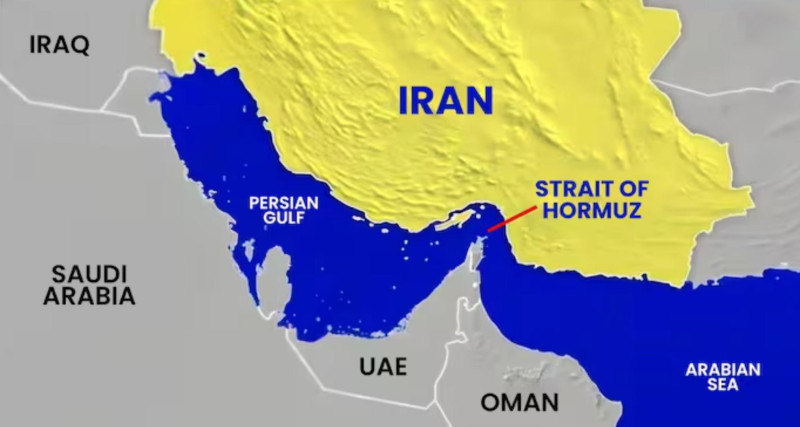
The United Kingdom has firmly declared it will not participate in the United States’ blockade of the Strait of Hormuz, a decision that has sent ripples through global oil markets and financial sectors alike. This news comes as Trump announced a blockade in response to the collapse of peace talks with Iran, sparking a widespread market reaction.
The Strait of Hormuz: A Strategic Choke Point
The Strait of Hormuz, a narrow waterway between Iran and the Arabian Peninsula, is one of the world's most critical maritime routes. Approximately 20% of the world's oil and an estimated 30% of liquefied natural gas (LNG) passes through this narrow strait . Control over this strait is essential for global energy security, and any disruption could lead to significant economic repercussions.
This blockade is Trump's latest move in a series of escalating tensions with Iran. The decision, announced on Sunday, has already triggered a seismic shift in stock futures and oil prices.
The U.S. stock futures tumbled sharply, with the Dow Jones Industrial Average futures dropping nearly 500 points, and oil prices surging above $104 a barrel . The blockade threatens to disrupt global energy supplies, a critical concern for energy-dependent economies across Asia .
UK's Stance: A Balancing Act
Britain's decision not to join the blockade reflects a nuanced approach to foreign policy. The UK, traditionally a close ally of the U.S., has opted for a more measured response, prioritizing its interests and regional stability over alignment with Trump's blockade of Hormuz .
The decision underscores Britain’s commitment to maintaining open dialogue and diplomatic channels, especially in the midst of heightened geopolitical tensions.
The UK’s stance is a strategic move to avoid being drawn into a conflict that could further destabilize the region. It also signals a potential shift in the UK’s approach to Middle Eastern conflicts, where it is increasingly adopting an independent foreign policy posture.
The Market Reaction and Global Implications
The implications of the blockade are far-reaching, with Asian economies particularly vulnerable. Countries like Japan, South Korea, and China, heavily reliant on Middle Eastern oil, could face severe economic strains if the blockade leads to prolonged supply disruptions .
Financial markets have reacted swiftly to the news, with the Dow Jones futures plunging and oil prices spiking .
The uncertainty surrounding the blockade has left investors jittery, and analysts are closely monitoring the situation to gauge the potential long-term impact.
The question now is: How far will Trump go to enforce this blockade, and what will be the international response?
Think again if you imagine stability in the Middle East. This blockade could, in fact, be the catalyst for even more significant geopolitical shifts, with countries re-evaluating their alliances and strategies in the face of rising tensions.
Nobody saw this coming. The announcement has left many questioning the scope and longevity of Trump's actions.
With the blockade now in effect, the world watches closely, wondering what the next moves will be. The situation remains fluid, and the international community is bracing for potential escalations.
As the world grapples with the implications of Trump’s blockade of the Strait of Hormuz, it's clear that the global energy landscape is on the brink of significant change.