Pentagon leaders under fire after news of Hegseth's Pulitzer Fiction prayer
Hegseth's Prayer Sparks Controversy
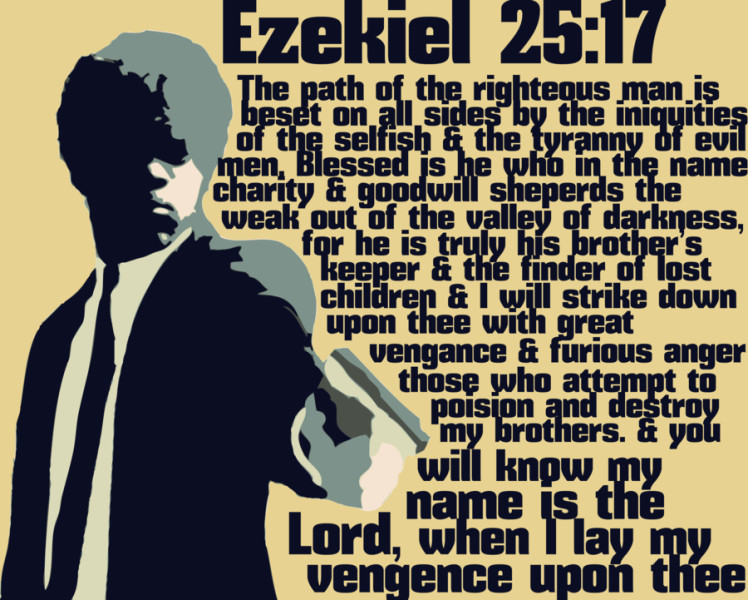
Pete Hegseth, Secretary of Defense, faced a firestorm of criticism. During a prayer service at the Pentagon, Hegseth quoted a passage that, to the discerning ear, resembled something straight out of Quentin Tarantino's Pulp Fiction . The verse, which Hegseth claimed was from the Bible, closely mirrored the iconic monologue delivered by Samuel L. Jackson's character, Jules Winnfield, in the film. The controversy erupted as social media users pointed out the discrepancies .
The Verse in Question: Pulp Fiction or Ezekiel 25:17?
Ezekiel 25:17, the supposed biblical verse, has become a focal point in the controversy. Hegseth's prayer, in its entirety, reflected a mixture of the biblical passage and the Pulp Fiction quote. The original verse, Ezekiel 25:17, reads: "I will execute great vengeance on them with wrathful rebukes. Then they will know that I am the Lord, when I lay my vengeance upon them." The Tarantino adaptation, on the other hand, is a more violent and dramatic rendition, often misquoted but not entirely off the mark in its core message .
Hegseth claimed that the lead mission planner for an Iran war rescue operation delivered the prayer to him. This story adds a layer of complexity, as it suggests a genuine attempt to incorporate a meaningful message rather than a deliberate misquote. The passage is loosely based on Ezekiel 25:17, with the original intention likely to inspire and galvanize the rescue team .
During the prayer service, Hegseth's prayer was aimed at bolstering the morale of the rescue team, with the words intended to deliver a powerful message. However, the mix-up led to public outcry and a significant backlash due to the revelation of the passage's origin .
Critics argue that the misuse of a cinematic dialogue in a sacred setting trivializes both the prayer and the mission’s gravity. Hegseth's defenders point out that the core message of the passage remains intact, even if the delivery was flawed. The debate highlights the thin line between inspiration and misrepresentation in public discourse .
Anderson Cooper's Scathing Rebuke
Anderson Cooper, a renowned journalist, did not mince words when he addressed the issue. On The Late Show, Cooper mocked Hegseth, dubbing him "Pentagon Pete" in a scathing attack. He highlighted the irony of a Pentagon prayer being more akin to a Tarantino film than the Bible .
Cooper's critique underscores the broader implications of such a misstep. The Pentagon, as a symbol of military strength and national security, is expected to uphold the highest standards of integrity and accuracy. The incident raises questions about the vetting process and the reliability of information disseminated at the highest levels .
Cooper's comments reflect a growing sentiment among critics who believe that the incident underscores a deeper issue of misrepresentation and miscommunication within the defense department. The pressure to deliver inspiring messages can sometimes lead to oversight and missteps .
In response, Hegseth defended his actions, emphasizing the significance of the message rather than the source. He claimed the prayer was intended to inspire and motivate the rescue team, and any deviation from the original text was unintentional. Despite his defense, the controversy continues to stir debate on the ethical and practical implications of such a mistake .
On social media, the clip of Hegseth's prayer went viral, with users sharing their surprise and disbelief. The mix-up led to a flurry of commentary and speculation, with many questioning the authenticity of the prayer and the motives behind it. The incident serves as a reminder of the delicate balance between authenticity and inspiration in public communication .
The next threshold to watch is the Defense Department's official response. Will they address the incident publicly, or will it be swept under the rug?