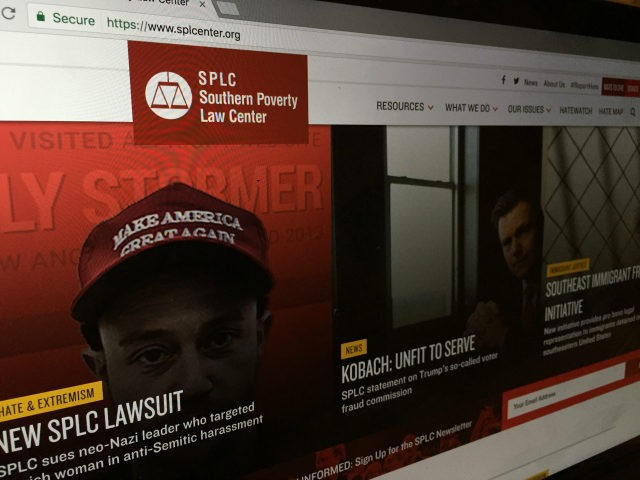
Charges of fraud and financial misconduct have landed the Southern Poverty Law Center (SPLC), a civil rights watchdog, in the crosshairs of federal investigators. The SPLC has been indicted for wire fraud, bank fraud, and money laundering, shocking the legal community and civil rights advocates alike.
Understanding the Southern Poverty Law Center
The SPLC is a nonprofit organization founded in 1971, renowned for its legal victories against hate groups and advocacy for marginalized communities. Based in Montgomery, Alabama, the SPLC has been a beacon of hope for many, fighting battles in the courts and public discourse against racism, discrimination, and extremism.
The SPLC has been instrumental in high-profile cases, including litigation against the Ku Klux Klan, the American Nazi Party, and other white supremacist groups. The center’s work has earned it a reputation as a powerful defender of civil rights, attracting millions in donations to fuel its legal battles. However, the organization has faced criticism over its methods and motivations, which have now come under intense federal scrutiny.
SPLC Controversy: Wire and Bank Fraud Charges
Acting Attorney General Todd Blanche announced that a federal grand jury in Montgomery, Alabama, has indicted the SPLC on 11 counts, including wire fraud, false statements to a federally insured bank, and conspiracy to commit concealment money laundering. The indictment alleges that the SPLC defrauded its donors by funding the extremism it claimed to combat. Specifically, the charges accuse the SPLC of paying members of extremist groups to spy and gather information, effectively providing financial support to hate groups in exchange for intelligence.
According to the Justice Department, the SPLC used funds meant for civil rights advocacy to pay informants embedded within extremist organizations. The indictment describes a scheme that allegedly spanned over a decade, during which the SPLC funneled over $3 million to these informants. The Justice Department equates these payments to "financial support" for hate groups, a direct violation of the SPLC’s stated mission and a breach of trust with its donors.
DOJ’s Investigation and SPLC’s Response
The Department of Justice's case against the SPLC follows years of scrutiny by the Trump administration, which has repeatedly criticized the organization for what it views as biased and politically motivated activism. The SPLC has denied these allegations, asserting that its methods are necessary for gathering intelligence on extremist groups and that the investigation is politically motivated. The SPLC acknowledged on Tuesday that it is under federal investigation and has vehemently rejected the charges, calling them "false allegations".
The Southern Poverty Law Center's response to the charges is direct and unapologetic, stating that it "will continue its work to fight hate and bigotry despite this politically motivated attack." The organization insists that its methods, including the use of informants, are essential for monitoring and exposing the activities of extremist groups, a stance that has sparked a fierce debate within the legal and civil rights communities.
As of now, the SPLC has not detailed its defense strategy, but it has publicly vowed to fight the charges. The legal battle promises to be lengthy and complex, with the outcome potentially reshaping the landscape of civil rights advocacy and legal strategies against extremist groups.
With the court date for the Southern Poverty Law Center looming on the horizon, eyes across the nation are fixed on a story that could rewrite the narrative of civil rights. The next chapter in the SPLC controversy is set to unfold in the courtroom, where the legitimacy and legality of the center’s tactics will be put under the microscope. The next legal threshold for the SPLC is the federal trial.