Real Estate Market: A Deep Dive into 2026's Trends and Prices
Imagine the streets of a bustling city where a house just sold for a million dollars more than its list price. This is the real estate market in 2026, where prices are skyrocketing and inventory is scarce, leaving buyers in a frenzy.
The Current State of the Housing Market in the USA
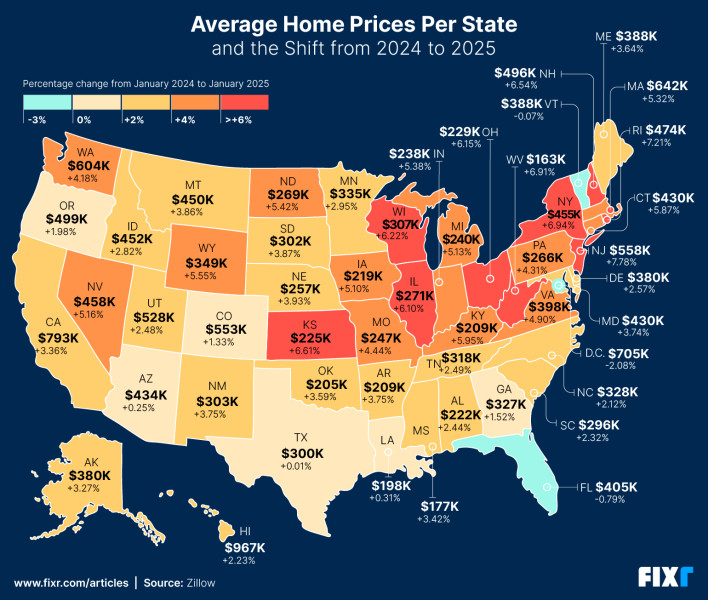
As of 2026, the real estate market is facing a dynamic shift, with home prices fluctuating and interest rates showing signs of improvement. This is according to the latest trends outlined by the Zillow Home Value Index (ZHVI), which tracks monthly changes in property values. The ZHVI provides a comprehensive view of the housing market, showing that while prices have been volatile, there are signs of stabilization.
Economic analysts like those at Realtor.com have noted that the housing market is seeing a rebound in inventory, which means more homes are available for sale. This is a positive sign for potential homebuyers who have been struggling with limited options in recent years. Hannah Jones, a senior economic research analyst at Realtor.com, comments, "The increase in inventory is a welcome relief for buyers who have been navigating a highly competitive market."
However, despite the increase in inventory, home prices remain high, driven by persistent demand and low supply. The FHFA House Price Index (HPI) shows a steady rise in single-family home prices, reflecting the market's ongoing volatility.
Predictions and Trends for the Real Estate Market in 2026
The real estate market in 2026 is poised for continued growth, with several key trends emerging. Experts predict that home prices will continue to rise, albeit at a slower pace, as the market adjusts to increasing inventory and stabilizing interest rates.
One significant trend is the shift in buyer behavior. With more homes available, buyers are becoming more selective, looking for properties that offer both affordability and value. This shift is evident in the increased demand for properties in suburban areas, which are seen as more affordable and family-friendly compared to urban centers. "Buyers are now looking beyond the traditional hotspots to find better value for their money."
Another trend is the impact of technology on the real estate market. Tools like the Reventure App’s interactive map allow buyers to explore real-time housing market data, providing detailed insights into home prices, inventory, and population trends across the United States.
"The real estate market in 2026 is increasingly data-driven, with buyers and sellers relying on digital tools to make informed decisions."
How Are Home Prices Affected by Market Dynamics?
There are several factors influencing home prices, including supply and demand, interest rates, and economic conditions. In 2026, the housing market is experiencing a surge in demand, driven by low mortgage rates and a growing population. However, the supply of new homes has not kept pace, leading to a significant gap between demand and supply. This imbalance is a key driver of rising home prices.
Interest rates also play a crucial role in shaping the real estate market. In 2026, interest rates are starting to stabilize after a period of volatility, which is expected to ease the financial burden on homebuyers. This stabilization is likely to support continued growth in the housing market, with more buyers entering the market as financing becomes more accessible.
Economic conditions, such as employment rates and consumer confidence, also impact home prices. As the economy continues to recover from recent disruptions, consumer confidence is on the rise, leading to increased demand for housing. However, economic uncertainty remains a wild card, with potential impacts on the housing market yet to be seen.
Impact of Economic Conditions on the Real Estate Market in 2026
The broader economic landscape significantly influences the real estate market in 2026. The U.S. economy is showing signs of recovery, with stable employment rates and increasing consumer confidence. This economic stability is fostering a more confident housing market, as buyers feel more secure in their financial positions. "Buyers are more optimistic about the future, which is driving demand in the real estate market."
However, there are still underlying concerns about economic stability. Noteworthy is the impact of inflation on the housing market. Rising prices for goods and services are affecting home prices, as construction costs and material prices increase. This inflationary pressure is adding to the overall cost of housing, making it more challenging for buyers to afford homes.
Looking at the current dynamics, it is clear that the real estate market in 2026 is a complex and evolving landscape, shaped by a multitude of factors including economic conditions, technological advancements, and shifting buyer preferences. Whether you are a potential homebuyer, seller, or investor, staying informed about these trends is crucial for navigating the market effectively.
"It's not the housing market; it's the homebuyers' market that is in a frenzy!"
How does this story make you feel?
 Up next · BusinessJerome Powell: Navigating Turbulence in the Economic Storm