In the quiet corridors of the Justice Department, a decision has been made that will reshape the landscape of capital punishment in the United States. On this crisp April morning, the DOJ has announced its readiness to adopt the firing squad as a permissible method of execution. This move has sparked a firestorm of controversy and debate across the nation, as legal experts, human rights advocates, and the public grapple with the implications of this return to a notoriously brutal method of state-sanctioned killing.
The Resurgence of Firing Squads: A Return to the Past
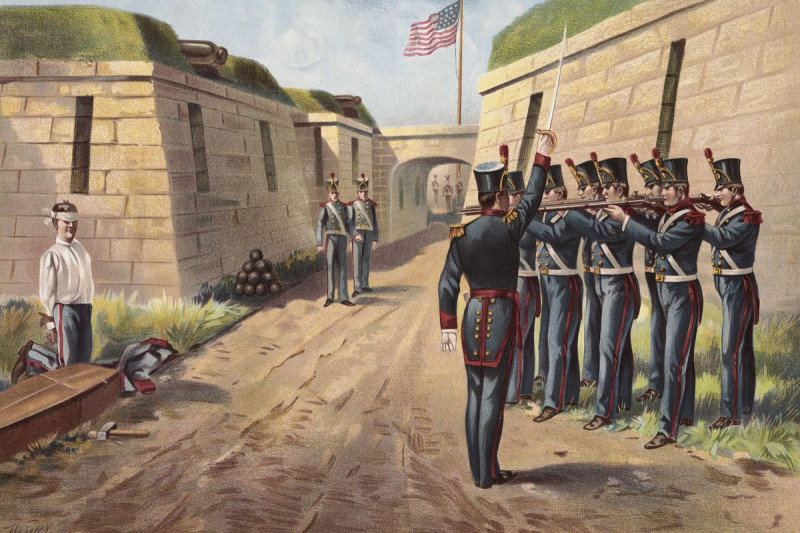
On Friday, the Department of Justice (DOJ) announced that it will permit the use of firing squads for federal executions. This decision is a stark reminder of an era long thought to be in the past. The firing squad has not been used in the U.S. since 2015, when Utah executed Ronnie Lee Gardner, a man convicted of murder. However, the DOJ’s recent move has brought this method back into the spotlight. The federal government has directed federal prisons to expand their methods of execution to include not just the firing squad, but also gas asphyxiation and electrocution.
"This decision is a fundamental shift in the way we approach capital punishment," said a high-ranking official within the Justice Department, speaking on condition of anonymity. "It's a response to the challenges we've faced with lethal injection, and a move to ensure that the death penalty is carried out swiftly and efficiently."
A Controversial Choice: Ethical and Legal Considerations
The DOJ's decision to reinstate the use of firing squads has drawn sharp criticism. Human rights organizations and legal scholars argue that the firing squad is a barbaric and inhumane method of execution that should have no place in a modern justice system. They point to the inherent risks of botched executions, which can cause prolonged suffering for the condemned. "The firing squad is a relic of a bygone era," said one of the legal scholars, "and its use today would be a tremendous step backward for our justice system."
However, the DOJ maintains that the firing squad offers a more reliable and efficient method of execution than lethal injection, which has been plagued by complications and procedural issues. "We have to consider all options," another official said. "The firing squad, while controversial, provides a guaranteed outcome, which is important for both the justice system and the victims' families."
Looking Forward: The Future of Capital Punishment
As the nation grapples with the DOJ's decision, the future of capital punishment in the U.S. remains uncertain. The debate over the firing squad is just one piece of a larger puzzle, as states and federal agencies continue to wrestle with the complexities of capital punishment. "This is a critical moment for the criminal justice system," said a legal expert. "We need to consider not just the methods of execution, but also the broader implications for our society."
"I'm not sure if this is the best way forward, though," said Carol, a retired school teacher who lives near a federal prison. "The legal system is so flawed, and the whole death penalty system is a perversion of justice. And I don’t see how adding firing squads to the mix makes things any better."
The Justice Department decision is "a significant step that raises many questions about the ethics and efficacy of the death penalty in the modern world," said one of the leading scholars in the field of criminal justice.
The Justice Department's decision to permit the use of firing squads for federal executions has opened a new chapter in the long-running debate over capital punishment. As the nation continues to grapple with the complex issues surrounding this contentious method of punishment, one question remains: How will this decision shape the future of the death penalty in the United States? Will it bring about a new era of efficiency and finality, or will it deepen the divide between those who seek justice and those who seek mercy? The firing squad is back, and the battle lines are drawn.