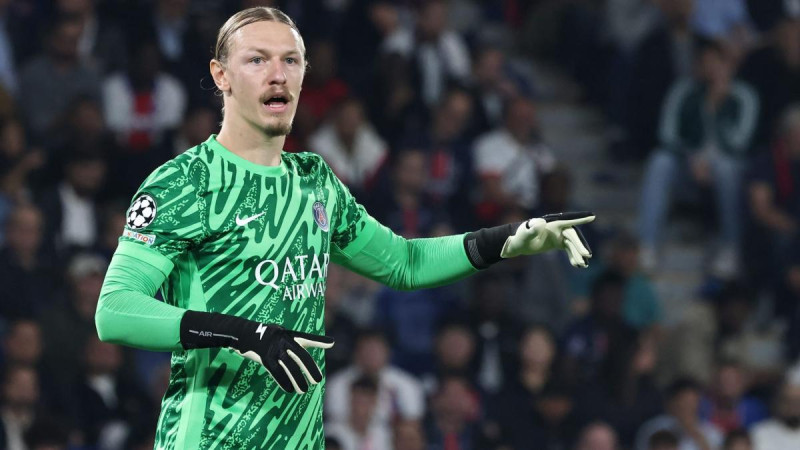
In a thrilling Champions League semi-final, Paris Saint-Germain (PSG) goalkeeper Matvey Safonov executed a bold and unconventional move to neutralize Michael Olise's offensive threat. Imagine the shock when viewers witnessed Safonov repeatedly kicking the ball out of play, seemingly throwing away crucial goal-kicks. Yet, the French fans erupted in applause—Luis Enrique's strategic brilliance had won the night.
Unveiling the Masterstroke: Safonov's Clever Clearances
Matvey Safonov's unconventional approach during the Champions League semi-final against Bayern Munich left many viewers perplexed. In a game where goal-kicks hold significant weight, Safonov's decision to send the ball out of play with astonishing regularity was met with confusion and criticism. Fans and analysts alike began questioning his performance, assuming it to be an error in judgment. However, Luis Enrique's revelation shed new light on the situation. The move, as it turned out, was a calculated tactic to disrupt Michael Olise's influence on the game, effectively containing his offensive prowess.
The Tactics Behind the Madness: Safonov's Game Plan
Luis Enrique's decision to employ Safonov in such an unconventional manner was a testament to his tactical acumen. By deliberately sending the ball out of play, Safonov ensured that Michael Olise, known for his lightning-fast counter-attacks, was effectively neutralized. This unorthodox strategy not only managed to contain Olise but also allowed PSG to maintain defensive stability, preventing Bayern's relentless attacks from gaining momentum. The strategy worked. Bayern's relentless attacking repeatedly stretched PSG's backline, but Safonov's bold maneuvers helped stabilize the defense.
A Game of Mind Games: Safonov and Olise in the Spotlight
Matvey Safonov's unconventional tactics were not only a strategic masterstroke but also a psychological ploy to unsettle Michael Olise. By consistently sending the ball out of play, Safonov disrupted Olise's usual rhythm, making it difficult for the winger to anticipate PSG's moves. The psychological impact of this tactic was evident as Olise struggled to find his footing throughout the match, often appearing hesitant and off-guard. Furthermore, Safonov's aggressive and disruptive play forced Bayern to adapt their strategies, often leading to disorganized attacks and missed opportunities. This psychological warfare was as crucial as Safonov's defensive maneuvers, highlighting the depth of Luis Enrique's tactical genius.
Luis Enrique's decision to employ Safonov in such an unconventional manner was a testament to his tactical acumen.
By the end of the match, it was clear that Luis Enrique's tactical genius had once again proven itself. Safonov's unconventional approach, far from being a mistake, was a masterstroke that not only contained Michael Olise but also turned the tide in PSG's favor. The psychological impact of Safonov's tactics was as significant as the defensive gains, highlighting the multidimensional approach to modern football. Safonov's bold maneuvering on the field demonstrates that the future of football is not just about physical prowess but also about strategic brilliance and calculated risk-taking.