Save America Act: A Pivotal Moment for Election Integrity in 2026

The clock strikes 11:05 PM on July 22, 2026, as Republicans gear up to push the Save America Act through the Senate. The SAVE America Act, or the Safeguard American Voter Eligibility Act, has been a contentious issue since its introduction.
Origins and Purpose of the Save America Act
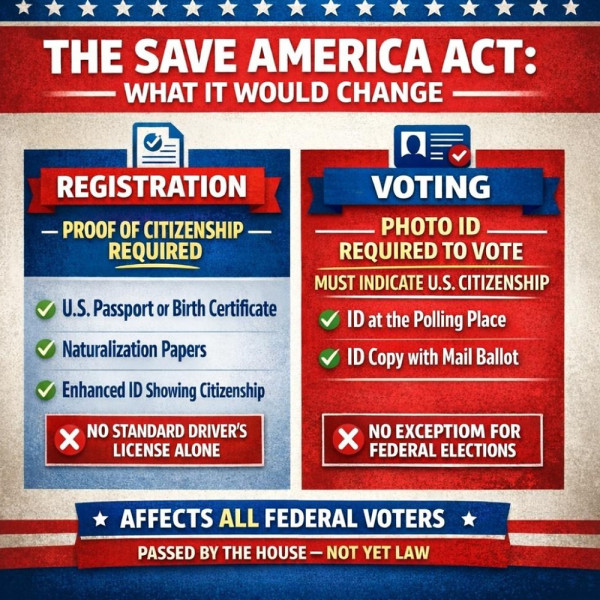
The Save America Act was introduced in the House on January 30, 2026, with a clear objective: to require documentary proof of U.S. citizenship when registering to vote and photo identification to vote in federal elections. This bill, if passed, would fundamentally alter the landscape of voter registration and election integrity in the United States.
The bill mandates that individuals provide documentary proof of U.S. citizenship to register to vote and requires photo identification to vote in federal elections. The Republicans contend this measure is essential to curb voter fraud and ensure the integrity of the electoral process. Critics, however, argue that it imposes unnecessary barriers to voting, potentially disenfranchising certain demographic groups.
The bill has already passed the House of Representatives multiple times. Most recently, it passed on February 10, 2026, and is now under intense debate in the Senate. The debate is heated, with both sides presenting compelling arguments.
Debate and Controversy Surrounding the Save America Act
The Save America Act has sparked fierce debate across political lines. Republicans argue that the bill is necessary to prevent voter fraud, which they believe has undermined the integrity of past elections. Democrats, on the other hand, view the bill as an attempt to suppress voter turnout, particularly among marginalized communities.
Senator John Johnson, a key proponent of the bill, has been pushing for its passage. His latest gambit involves adding key provisions of the Save America Act to a budget reconciliation bill, a move that could side-step Democratic opposition and make it easier to pass. This strategic maneuver has intensified the political drama, with both sides preparing for a climactic showdown.
As the Senate debates the bill, the implications of the Save America Act are far-reaching. If passed, it would require states to accept and process only applications to register to vote that include proof of U.S. citizenship. This could lead to a significant overhaul of voter registration processes across the country.
The Fight for Election Integrity: What's Next?
The future of the Save America Act hangs in the balance. The Senate is set to vote on the bill, and the outcome could dramatically reshape the American electoral landscape. As the clock ticks, Speaker Johnson’s plan to include key provisions in a budget reconciliation bill adds a layer of intrigue.
If the bill passes, it will likely face legal challenges, with opponents arguing that it violates voting rights. If it fails, the debate over election integrity and voter suppression will continue, shaping the political discourse leading up to the next election.
The clock strikes 11:05 PM on July 22, 2026, as Republicans gear up to push the Save America Act through the Senate.
“We need to ensure that every vote cast in this country is a legitimate vote from a legitimate American citizen. The Save America Act is a step in the right direction to achieve that goal,” said Senator Johnson in a heated debate session.
How does this story make you feel?
 Up next · PoliticsTrump's Political Influence in Georgia: The Case of Mike Collins