Hurricane Genevieve expected to become first major storm of 2026 season
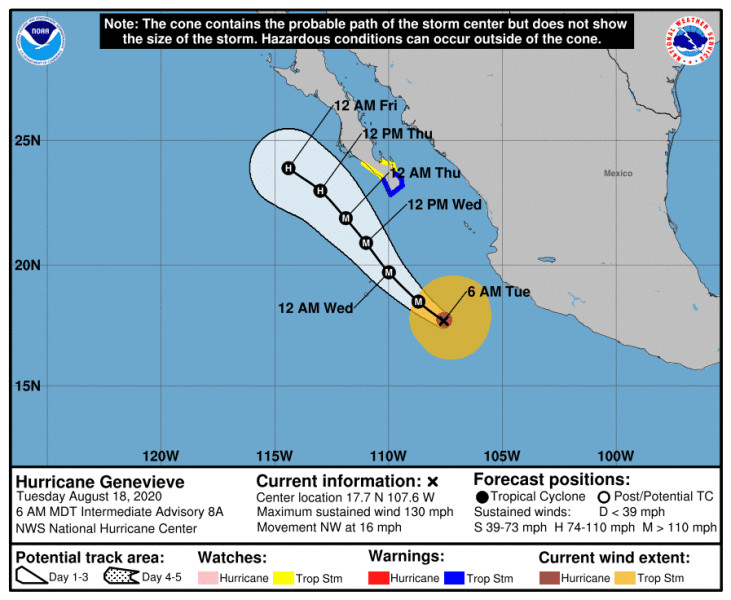
Hurricane Genevieve, the seventh Eastern Pacific storm of 2026, is forecast to reach Category 4 strength while staying offshore of Mexico, as another storm, Fausto, threatens Hawaii.

Key points
- Genevieve formed on July 24 and is forecast to become a Category 4 hurricane.
- The storm is moving westward off Mexico's coast with no landfall expected.
- Hurricane Fausto is weakening but still poses high surf and flooding risks for Hawaii.
- The Atlantic basin remains quiet in July, though activity could rise later in the season.
As Hurricane Genevieve gains strength in the eastern Pacific, it's hard not to think about the hurricane season of 2026 so far. Look, you have two Category 2 storms out there, Genevieve in the eastern Pacific and Fausto heading toward Hawaii. And then — get this — it’s not even peak season yet. It’s like the Atlantic is just sitting there, waiting for its turn. We'll get to that in a bit, but first, let's talk about Genevieve.
Genevieve's Path and Intensity: From Tropical Storm to Major Hurricane
Genevieve formed on July 24 and is the seventh storm of the 2026 hurricane season in the Eastern Pacific. It's forecast to become the first major hurricane of the 2026 season, expected to reach Category 4 intensity. For now, Genevieve is moving through the Pacific off Mexico, but no direct threat to land is forecast. Think about that for a second. Genevieve is barreling toward the coast of Mexico, but it's not expected to make landfall. It's like the storm is playing a game of chicken, daring to get as close as possible without actually hitting the shore. At the moment, it seems to be winning.
Hawaii Braces for Fausto's Impact: High Surf and Possible Flooding
Hurricane Fausto is heading toward Hawaii, but here's the thing: it's slowly weakening. That said, Hawaii is expecting high surf, possible flooding, and strong winds. In spite of the weakening trend, Fausto is still expected to bring significant impacts to the Hawaiian Islands. As Fausto approaches, residents and visitors are advised to stay cautious. Danger of dehydration, heat stroke, heat exhaustion, and heat cramps is significant. Stay indoors in air conditioning or a well-ventilated area if possible. Here's the thing: despite the weakened intensity, Fausto is still a hurricane. This isn’t the time for complacency. And here’s where it gets a little eerie: after Fausto passed by Hawaii, it’s like the hurricane season is just getting started. It’s like the Atlantic is holding its breath, waiting for its turn to steal the spotlight.
Atlantic's Quiet Before the Storm: What's Next for the Hurricane Season?
While the Pacific is seeing significant activity, the Atlantic is relatively quiet. Here's the thing: it's only July. The Atlantic hurricane season typically peaks in August and September. So, while the Atlantic is quiet for now, it's not the time to let our guard down. Think about it. We could still see a lot of activity in the Atlantic over the next few months. It’s like the calm before the storm.
"The Atlantic hurricane season is just getting started. It’s only July, and we’ve already seen significant activity in the Pacific. We could still see a lot of activity in the Atlantic over the next few months. It’s like the calm before the storm."
Bryan Norcross, hurricane expert
Your questions, answered
What intensity is Hurricane Genevieve expected to reach?
Forecasters predict Genevieve will become a Category 4 hurricane, the first major storm of the 2026 Eastern Pacific season.
Will Hurricane Genevieve make landfall in Mexico?
No direct landfall is forecast; the storm is expected to stay offshore.
What impacts are expected from Hurricane Fausto in Hawaii?
Fausto is expected to bring high surf, possible flooding and strong winds despite weakening.
Quick poll
Do you expect the Atlantic hurricane season to become more active after these Pacific storms?
0 votes
How does this story make you feel?
Topics
 Up next · ScienceUnstoppable Heat: The Looming Danger of the 2026 Heat Dome