Boeing's Air Force One Contract: Cost Overruns and Market Impact
In the bustling corridors of the Pentagon, the air is thick with anticipation and a hint of tension. Boeing executives, gathered for a critical update, are bracing for the latest developments in the Air Force One contract talks. The ongoing cost overruns and extended delivery timelines have cast a shadow over the company’s latest financial reports, leaving investors and stakeholders on edge. The Boeing (BA) stock has seen a rollercoaster week, reflecting the turbulence within the company's most high-profile project.
Air Force One Contract: Delays and Financial Burdens
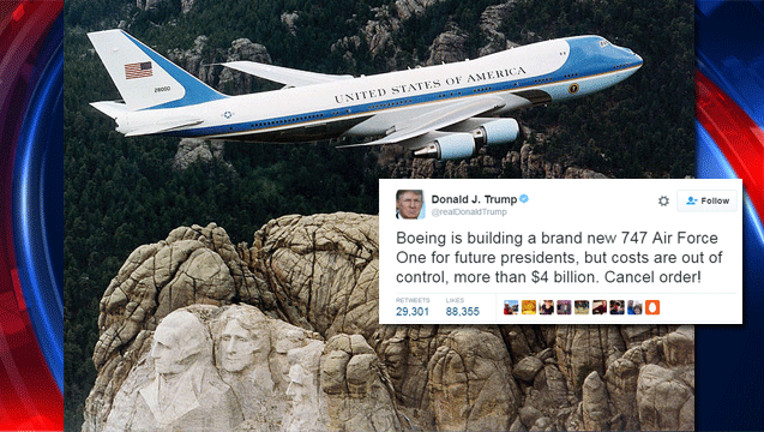
Boeing’s contract to build the next generation of Air Force One jets has been fraught with delays and cost overruns. The aircraft, based on the modified 747-8 model, are part of a contract worth $125 million for initial, long-lead spare parts, according to a modification awarded by the Air Force. However, the actual cost has ballooned, with Boeing reporting an additional $280 million in expenses, pushing the total cost well beyond initial estimates. The company’s quarterly financial statements reveal the mounting financial burden, with a reported loss of $428 million in the second quarter of 2026 alone. The ramp-up in production and certification resources in the Air Force One program has been particularly costly, adding to the already high stakes of this project.
Impact on Boeing (BA) Stock
The financial strain from the Air Force One program has had a significant impact on the BA stock. Boeing’s stock has seen significant volatility, fluctuating between $205.00 and $221.95 on July 27, 2026. Despite some positive market movements, such as a 2.92% rise after reporting better-than-expected revenue of $24.6 billion, the stock remains under pressure due to ongoing concerns. The broader market volatility, influenced by surging oil prices, has also played a role, with the S&P 500 experiencing a 1% drop. However, the primary cause of concern for investors remains the Air Force One project, which continues to drag on the company’s financial performance.
In a recent statement, a Boeing executive acknowledged the challenges, saying, “The Air Force One program has been a complex and demanding project. We are committed to delivering the best possible aircraft, but the costs and delays have been more significant than anticipated. We are working closely with the U.S. Air Force to address these issues and ensure the successful completion of the project.”
Market Sentiment and Future Outlook
The market sentiment towards Boeing remains mixed. While the company continues to secure significant orders, such as the $19 billion order from Airbus and the contract to modernize the flight deck for the C-17A Globemaster III, the ongoing issues with the Air Force One contract have cast a long shadow. Investors are closely watching how Boeing navigates these challenges, with many hoping that the company can turn the corner and deliver on its promises. The future of the BA stock hinges on Boeing's ability to manage costs and meet deadlines, especially as the company faces increasing competition and market volatility.
The question lingers: can Boeing manage the Air Force One contract and restore investor confidence in the face of mounting financial pressures? The investors are left grappling with the uncertainty as they await the next update from Boeing.
“The financial burden of the Air Force One contract is a significant challenge, but Boeing has the expertise and resources to overcome it. The key is to stay the course and deliver an aircraft that meets the highest standards.” - An informed industry insider.
How does this story make you feel?
 Up next · BusinessThe Rollercoaster Ride of Bloom Energy Stock